

Foto Tallinn 2026 brings the work of 45 artists from 15 countries to the Kai Art Center. A few days earlier, the international photography community gathered at the Nida Photography Symposium, where recurring themes included time, movement, and slowing down. The two events point to a broader shift: at a moment when more images are being produced, and faster, than ever before, photographic art is searching, increasingly consciously, for ways to make us stop. The paradox is that the art world itself is, at the same time, moving ever faster.
At the Foto Tallinn fair, running 18–20 September, audiences will encounter 30 artists through 16 galleries. The gallery selection is strong, bringing together key figures in Nordic and Baltic contemporary art and photography. Alongside the galleries’ presentations are 15 artists selected by an international jury through an open call — a curated cross-section of what an international jury currently considers relevant in photo-based art. The fair’s public programme is closely tied to collecting, curator-led tours, and the fair format itself, but far more interesting material opens up through the work of the photographic artists themselves. The questions that recur across different artists’ practices make it possible to see what broader shifts are currently taking place in photographic art.
The focus has long since shifted away from being solely on what photography depicts, but increasingly on how an image comes into being, in what form it exists, how we look at it, and what role remains for the photographer in an era when images can be produced practically without limit.
Photography’s Changing Relationship to Reality
In international photographic art, the question of the photographic image’s relationship to reality remains acutely present. This is not, in itself, a new problem — photography has never been a neutral copy of reality — but under conditions of digital manipulation, algorithmic image processing, and generative artificial intelligence, the scope of the question has changed. It is no longer possible, simply by looking at an image, to distinguish whether one is looking at a documented event, a staged scene, a manipulated photograph, or a synthetically generated picture. Photography’s historical authority as witness to the visible world has not disappeared, but it can no longer be taken for granted. The works by the artists exhibiting at Foto Tallinn offer several different responses to this tension.
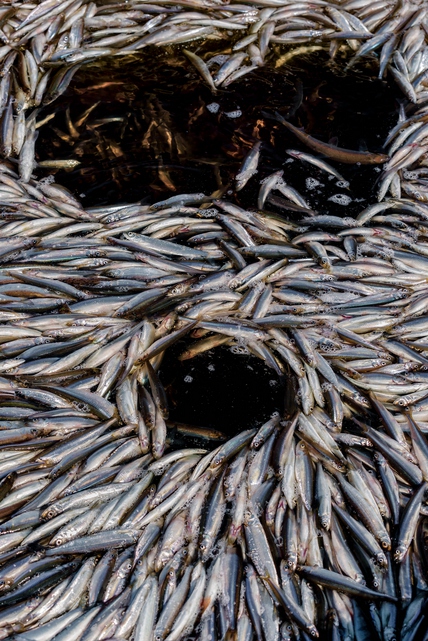
Antti J. Leinonen „Vendace Pareidolia“ (2024). 100 × 70 cm. Pigmentfoto, alumiiniumraam, muuseumiklaas. Tiraaž_ 5 + 2 AP_
At the same time, Antti J. Leinonen’s Pyynti demonstrates photography’s continuing power as witness to reality and as a carrier of historical memory. Leinonen works at the boundary of documentary photography and fine art, and his long-term series follows a community of fishermen in northern Finland and a way of life that is becoming ever rarer. Here, fishing signifies not merely an occupation but knowledge, skills, and a way of life passed down between generations.
It is precisely this long-term documentation that gives these photographs a meaning extending beyond the aesthetics of any single image. Leinonen records something that may change or disappear, and photography thereby becomes both a testimony to the present and material for a future historical memory. At the same time, he does not present this world as a neutral observer: his recognisable photographic style, his use of colour, and the humour running through the work all shape the way reality reaches the viewer.
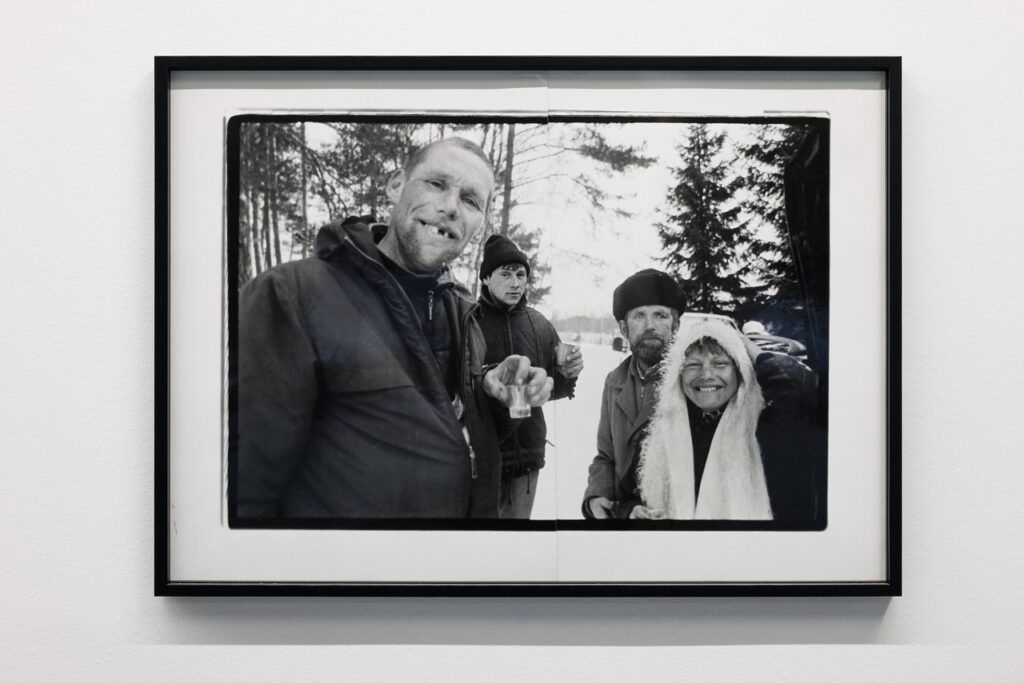
Vika Eksta. Funeral in Sloboda II (2025). 50 × 60 cm. Silver gelatin print. Edition_ 1_2 + AP
With Vika Eksta, the question of documentary photography’s objectivity turns toward the photographer’s own past. The works exhibited at Foto Tallinn date from a time when she had only just begun in photography and was captivated by the Magnum photographers and the idea of capturing life as objectively as possible. She went to the funeral of her aunt Zoņa with a 35mm camera and black-and-white film, thinking, as she herself puts it, about how Cartier-Bresson would have seen the event.
With the passing of years, however, both the artist and the meaning of these photographs have changed. Images once made to document the present as objectively as possible have become material through which to look back on both a family loss and the artist’s own former understanding of photography.
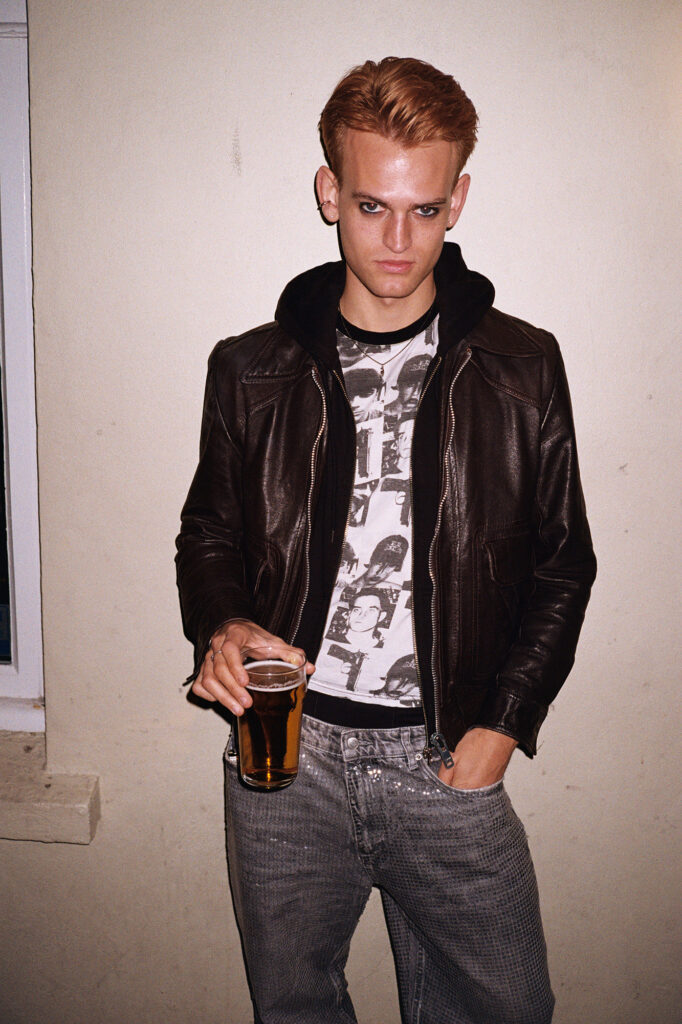
Jói Kjartans „Hidden People 02“ (2026). 50 × 70 cm_
Jói Kjartans’s Huldufólk ties photography’s evidentiary function into something of a knot, using the documentary medium to search for the “hidden people” (huldufólk) known from Icelandic folklore — supernatural beings said to live in nature — that is, to capture something whose existence photography cannot confirm. Kjartans’s photographs can also be found in the Norwegian Journal of Photography, which features photographers working between traditional press photography and art photography.
In the practice of several Foto Tallinn participants, then, the aim is not to restore the boundary between the documentary and the constructed image, but to explore different ways in which photography relates to reality.
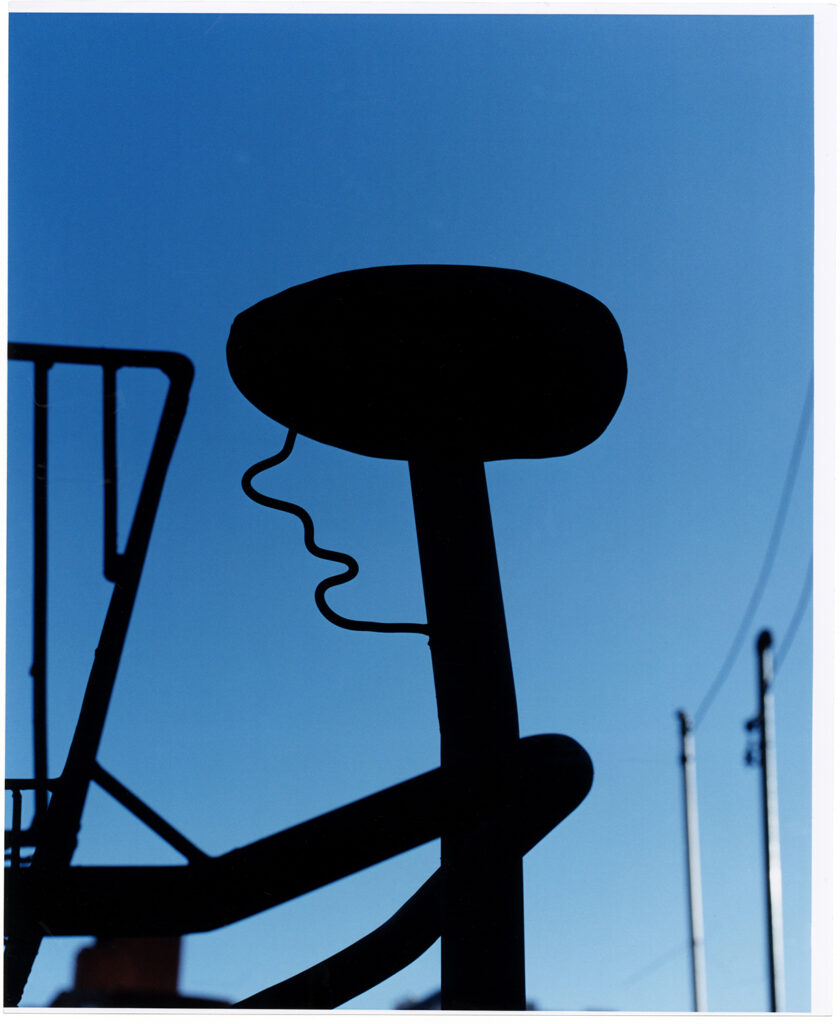 Naguel Rivero. From series N.E.P.A. Nada Es Perfecto Aquí (2025)
Naguel Rivero is an Argentine visual artist living in Paris, whose series “Nada Es Perfecto Aquí” (“Nothing Here Is Perfect”) points to the art of improvisation under conditions of scarcity. Using a hybrid methodology of documentary film and semi-fictional staging, Rivero documents the Argentine ethos — also fairly familiar to us from the Soviet era — of atamos con alambre (“we tie everything together with wire”), turning informal urban solutions into spontaneous sculptures. Here, reality and staging are not opposites. The artist’s intervention can instead amplify something already present in the observed environment, making it more visible.
This year’s selection thus does not appear to seek a return to photography’s former “status of truth.” As with any good work of art more broadly, photography’s relationship is not to truth but rather to plausibility. Uncertainty itself is treated as a contemporary condition of the photographic image: who creates the picture, what reality it mediates, what has been staged within it, and on what basis the viewer decides what to believe at all. What matters is what the image is able to draw out of reality, what we might not otherwise notice without it, and what new knowledge, experience, or perspective it adds.
Being a Woman, and the Body
Being a woman, and the visual and cultural constructions formed around it, make up another strong axis in the Foto Tallinn selection. The question is not only how the female body is depicted in photography, but how being a woman is constructed through the body, who controls that image, and what happens when one of the strongest cultural symbols of being a woman is removed.
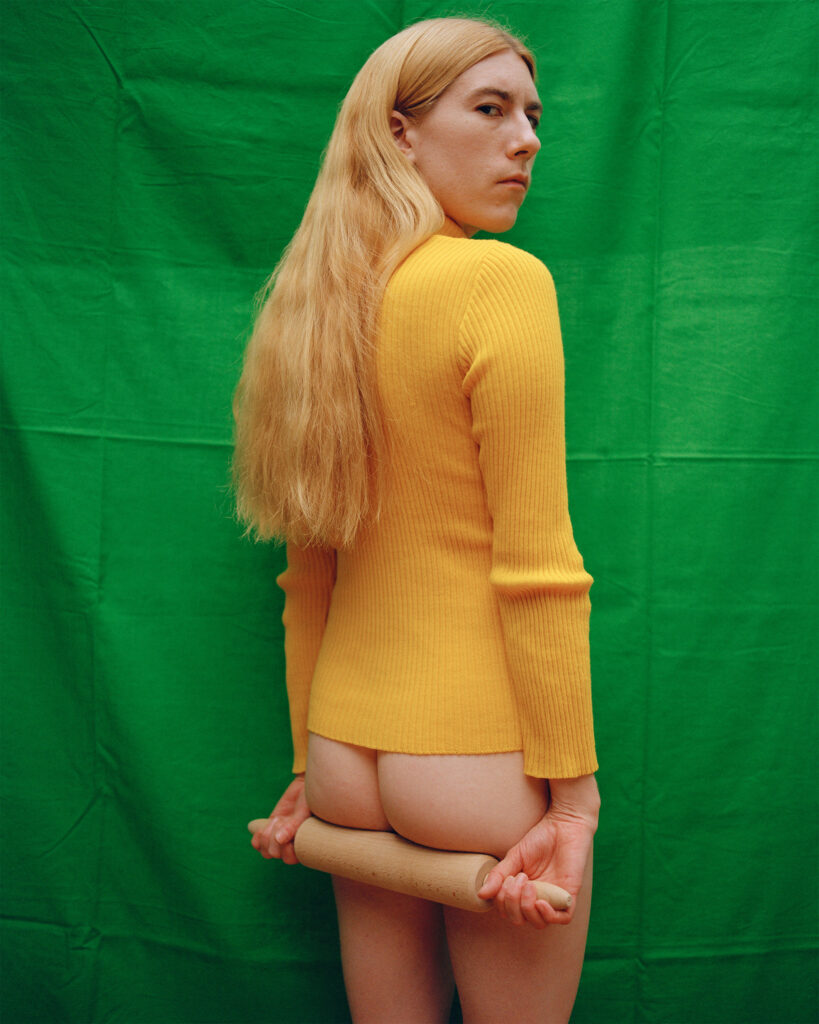
In Emma Sarpaniemi’s performative self-portraits, the construction of self-image is made public. The characters created through clothing, found objects, and accessories are at once imagined figures and parts of the artist’s own identity. Sarpaniemi often deliberately leaves the camera’s shutter release cable in the frame. The illusion is not concealed: both the act of image-making and the artist’s authorship and control over how her body appears to the viewer remain visible. Being a woman does not appear here as a single fixed identity, but as something that can be performed, constructed, and reshaped.
Maria Kapajeva’s My Parts, Not sharpens the same question considerably. Before a preventive double mastectomy, the artist documented her breasts through photographs, prints, and casts. The project interweaves the female body, queer identity, medical necessity, and a very strong cultural image of breasts as a symbol of femininity. In Kapajeva’s own story, a contradiction arises in relation to her identity as a queer woman. The removal of the breasts becomes far more than a medical event: it opens up the question of how strongly we are accustomed to tying being a woman to a specific body, and what remains of that identity once one of its most culturally charged features disappears. Kapajeva, however, does not leave the lost body part only as a photographic memory. Since the operation, she has continued translating its form into clay, creating bell-shaped objects based on breast casts taken before the surgery. The body becomes an image, a trace, and finally a new material object.
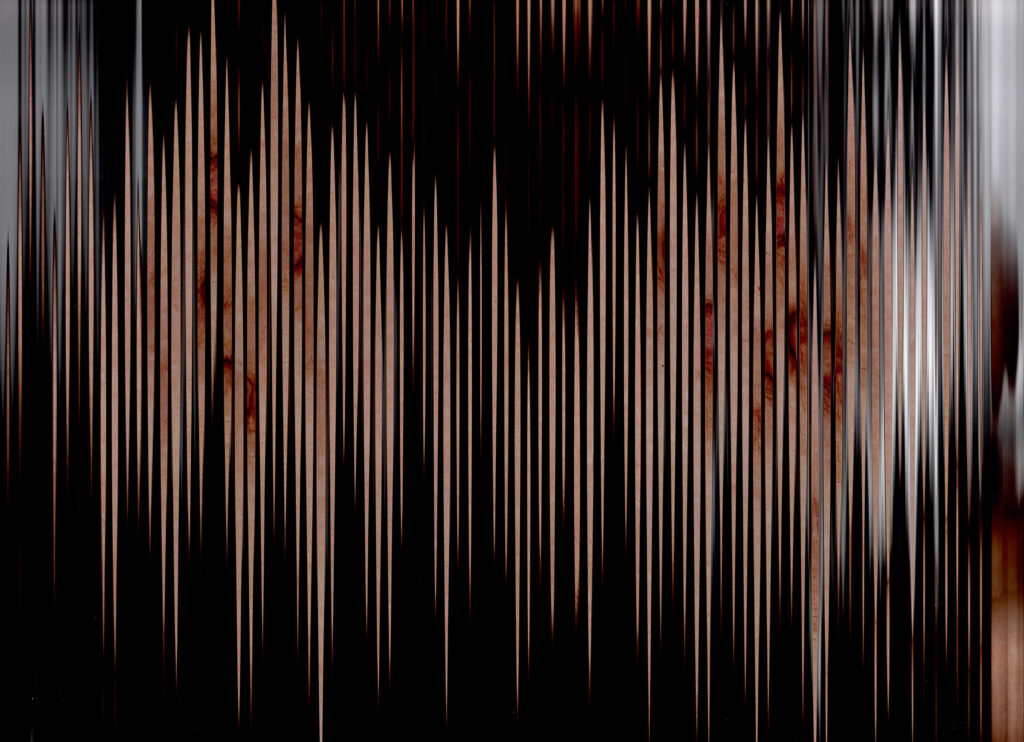
Maria Kapajeva. Parts of Me, Not (2025). 75 × 54 cm. Color pigment print on Hahnemühle Photo Rag Baryta paper, aluminum composite, Trulife museum acrylic. Edition of 5 + 1 AP
The Materiality of Photography
One of the clearest shifts in this year’s selection is photography’s movement from the flat image toward the physical object. How much photography must remain in such a work for us still to call it photographic art? This is not a new question, but in 2026 it has a new context. Our everyday visual environment has changed radically; the photograph is a flow — information moving from screen to screen, copyable, editable, and, increasingly, synthetically generated as well. It is precisely in this situation that part of photographic art appears to be moving in the opposite direction: back toward material. The photograph is no longer the endpoint of a work but material, or one stage in a longer process: the image is transferred onto porcelain or glass, printed on silk, joined with wood, concrete, or metal, worked by hand, or carried forward into sculpture and installation.
What matters here is not merely a change of support. When the image acquires surface, weight, texture, and spatial presence, the material itself begins to shape its meaning. At the same time, the speed of photography’s immediate capture and digital image circulation meets techniques that require time, physical labour, and often craft skill.
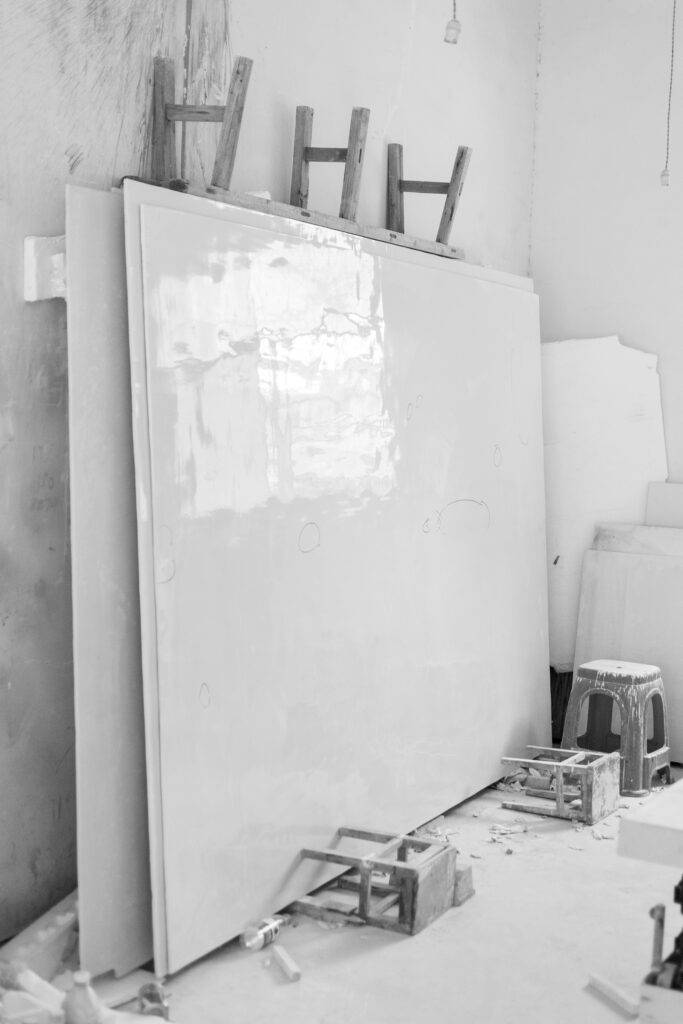
Johanna Adojaan. Bits #03 (2025). 18 × 11 cm. Photo transfer on porcelain, wooden shelf (1)
Johanna Adojaan transfers black-and-white photographs made in Jingdezhen onto semi-translucent porcelain plates. This creates a particularly telling temporal tension. The photographic image — a technology whose history spans less than two centuries, and whose digital form can today arise and spread within seconds — is placed onto porcelain, whose manufacturing tradition in China reaches back more than a thousand years. Jingdezhen itself has been one of the centres of Chinese porcelain production for centuries. The image is no longer only what is seen: the material’s history, its translucency, fragility, and the process of its making begin to intervene in its meaning.
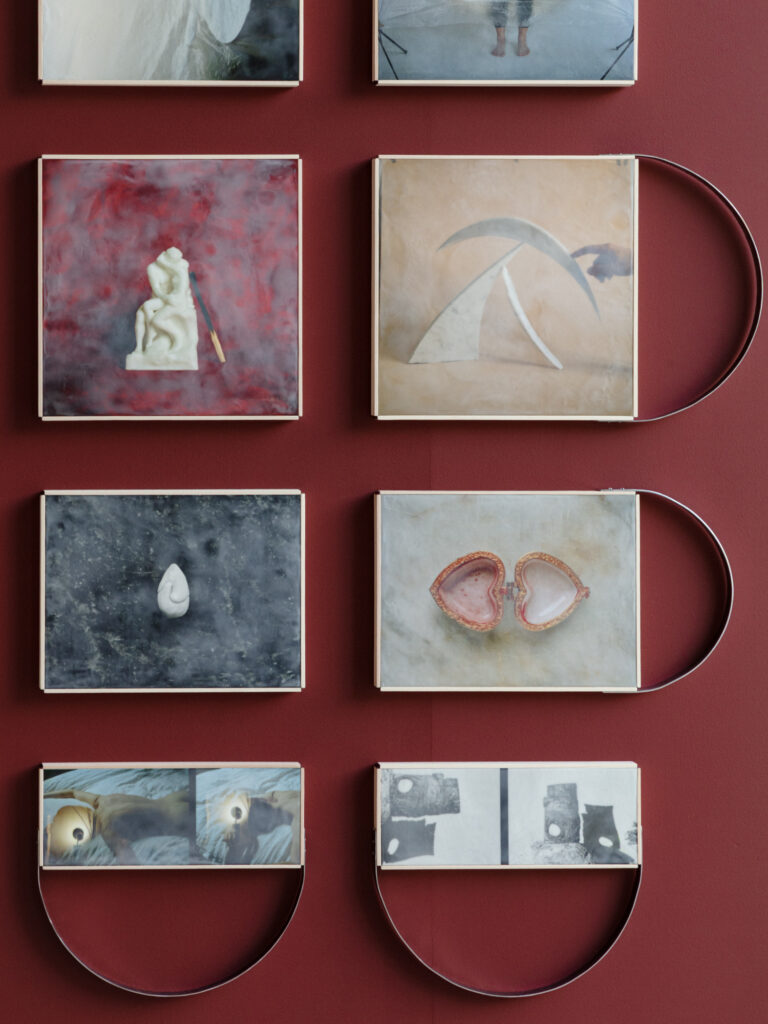
Ananya Tanttu. Venus is a hormonal planet (The Kiss) (2026). 56 × 82 (_56) × 4,5 cm. Archival inkjet print, dibond, beeswax, dammar resin, pine, steel. Edition_ 5 + 2 AP
Ananya Tanttu’s Double Weave consists of sixteen photo-objects in which the photographic image has been given the form of a physical object. Weaving is the work’s conceptual starting point: Tanttu imagines it as a cycle of receiving and releasing — if the warp were consciousness and space, and the weft experience, then time would be the rhythm of the weaving.
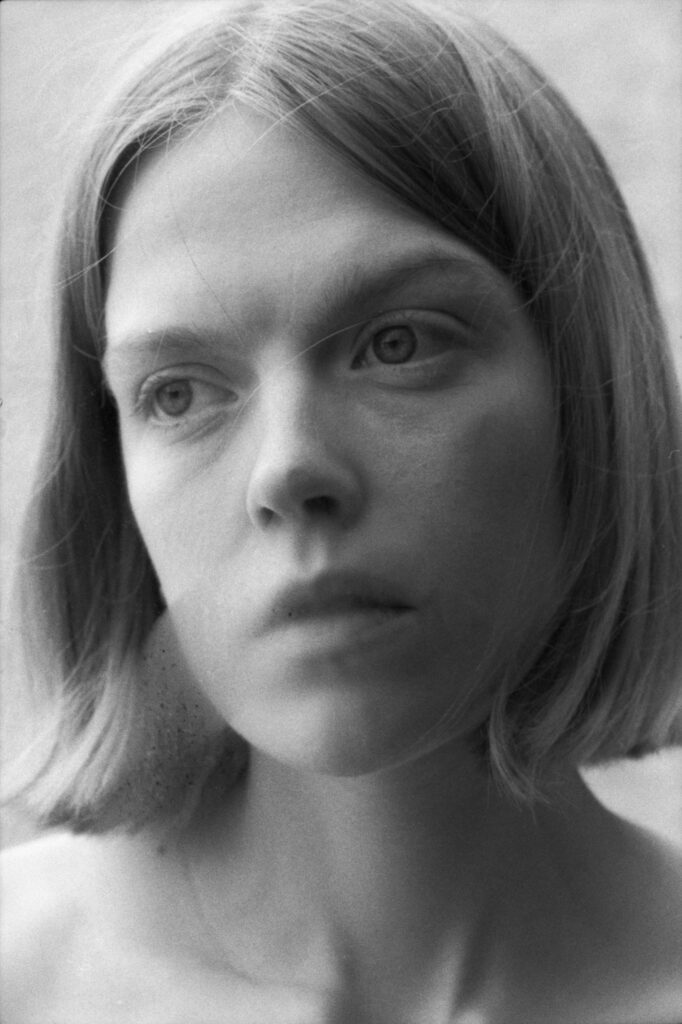
Diana Luganski „Hengittäjä“ (2025)
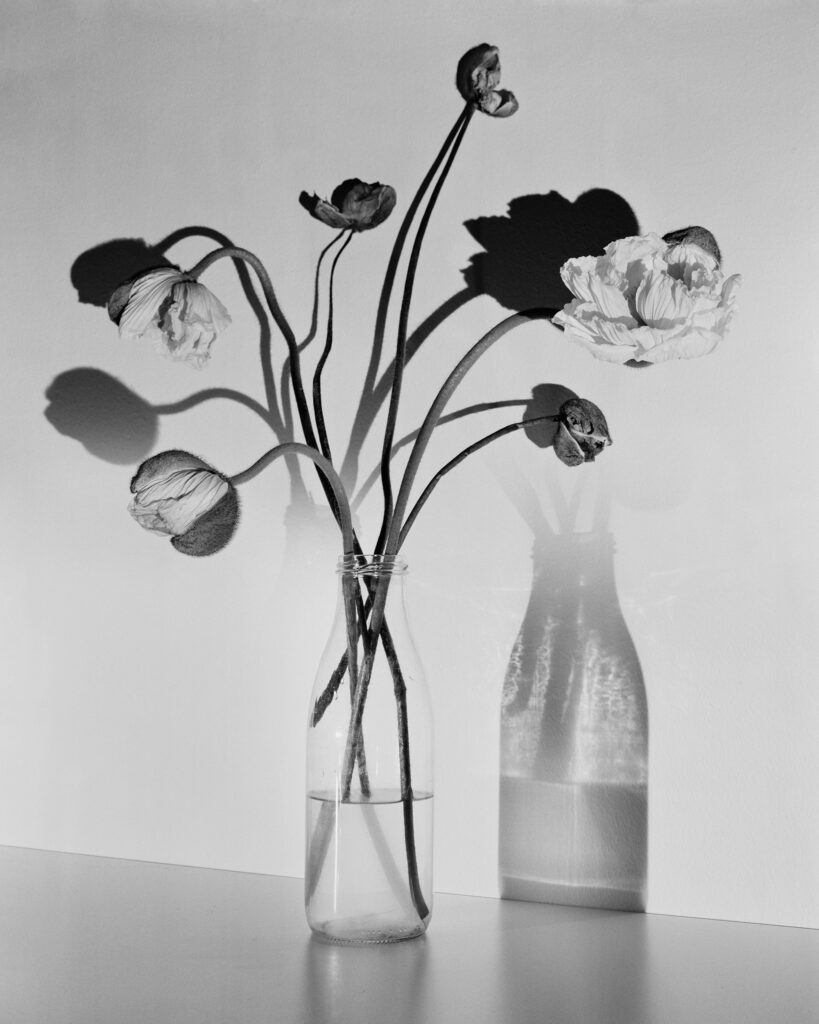
Diana Luganski „Hypnosis“ (2026)
Diana Luganski combines photography with sculptural techniques, including casting. The artist herself links mould-making to photographic logic — in both cases, an impression is taken of something that already exists. In her Sacer series, presented for the first time at Foto Tallinn, she combines photo prints with sculptures cast in bronze.
Bob Bicknell-Knight starts from a world that has been constructed from the outset. His Altars series takes as its starting point clocks drawn from various video games. Images that begin as digital photographs are processed, printed on canvas, and overpainted with acrylic; they are surrounded by digitally modelled, 3D-printed frames coated in layers of concrete. In this way, the image moves from a virtual game space, through several technical and material stages, into a physical object. The motif of frozen clocks is likewise no accident: the artist uses them to examine video games’ fabricated and stretchable time, while the altar-like frames add meanings of belief, power, and control.
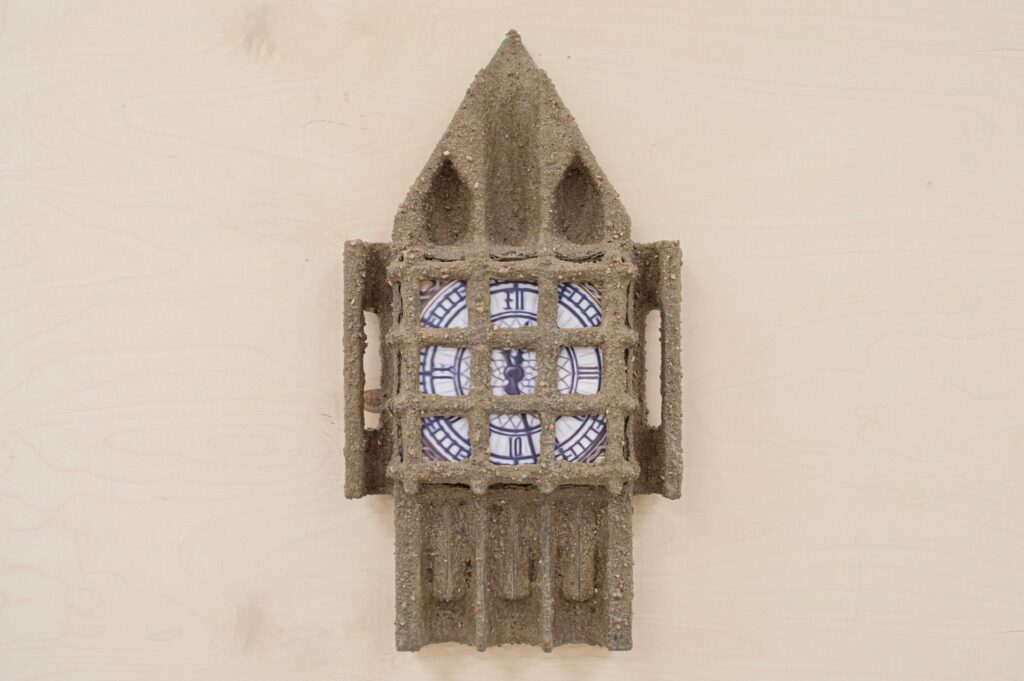
Bob Bicknell-Knight. Passage (2025). 43 × 23 × 6 cm. Printed ink and acrylic on canvas, pine wood, PLA, concrete, PVA, water, filler. Unique
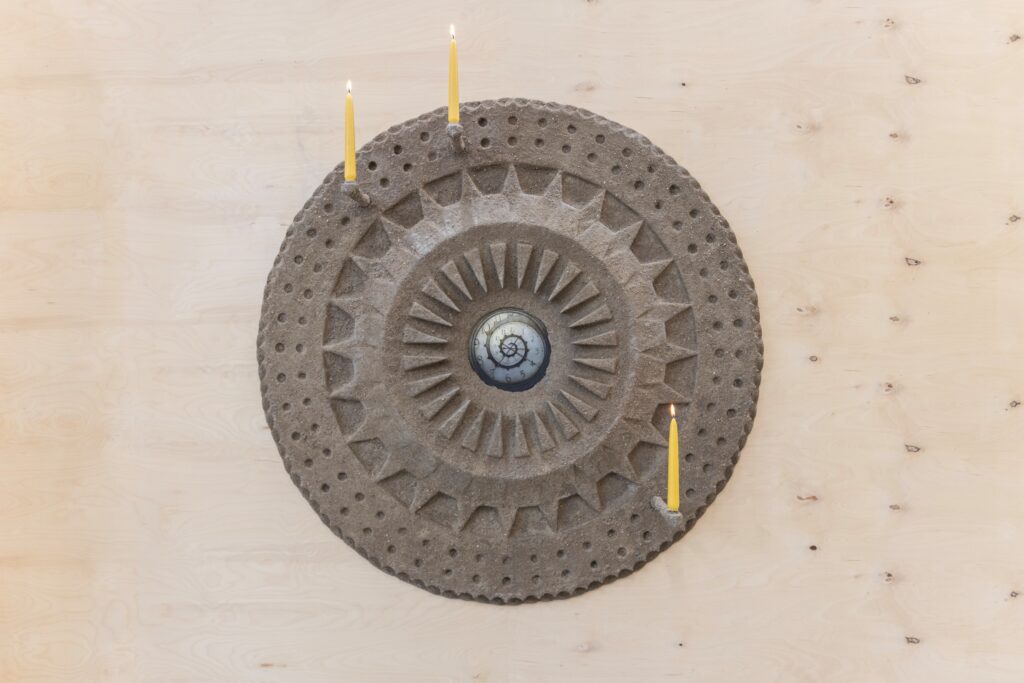
Bob Bicknell-Knight. Routine (2025). 105 × 105 × 10 cm. Printed ink and acrylic on canvas, pine wood, PLA, concrete, copper bolts, PVA, water, filler, beeswax, candle wicks. Unique
Here, the opposition between digital and material becomes especially interesting. The original image does not claim to document the real world; it comes from an already-constructed virtual world, yet the artist gives it an increasingly greater physical presence: ink, canvas, acrylic, 3D print, and concrete. Photography functions as one stage in a longer process, whose end result sits as much in the territory of painting and sculpture as in that of photography.
Alongside the speed of the digital image, the time required by material processes is brought in. Firing porcelain, silk-screen printing, glass, mould-making, or camera-less photographic processes once again turn the image into something with a production time, physical limits, and a specific location.
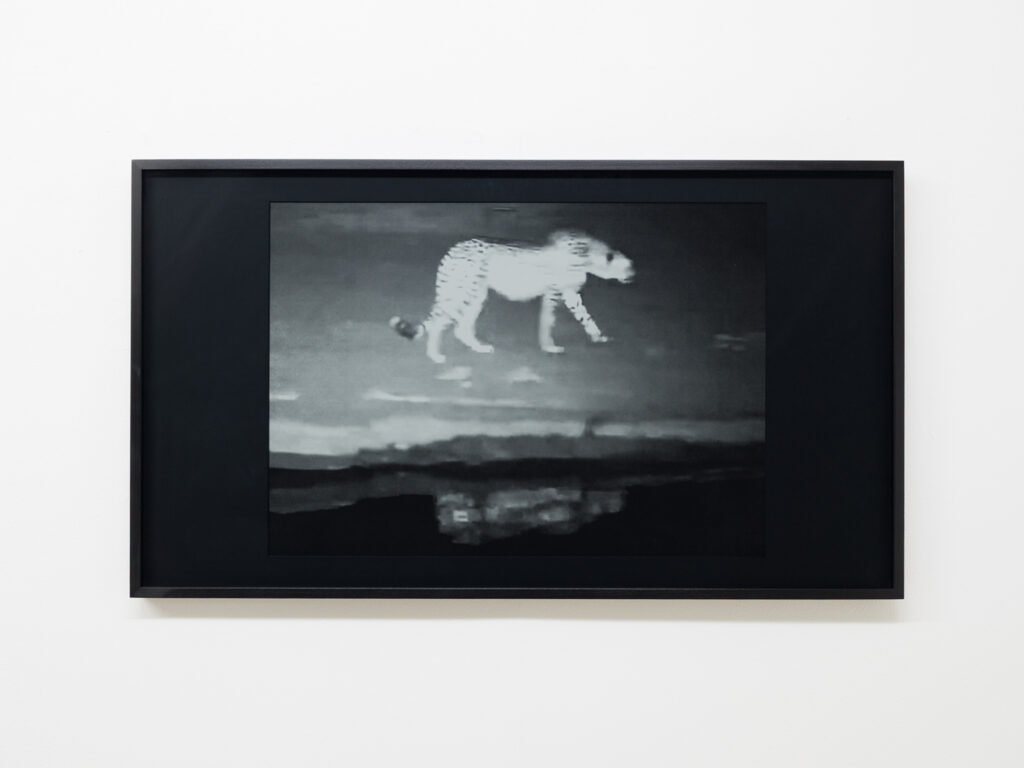
Gedvilė Tamošiūnaitė untitled (cheetah) (2026). 107 × 60 cm. Hand-pulled silkscreen print on archival paper, artist’s frame — black-lacquered beech wood, toned grey glass. Paper edition 1_4 + 1 AP
Gedvile Tamošiūnaitė states this connection most directly. Screen Works begins with the unbroken digital image stream of surveillance cameras, from which she captures screenshots and translates them into screen prints on glass and paper. The artist sets a slow, hand-made process against the fleeting digital image from which the works originate. In this way, rapidly consumed and vanishing screen images become material surfaces. Here, two phenomena that at first seem separate — photography’s new materiality and the rise of slowness — begin to directly intersect.
Slowness Has Become a Cultural Response to Acceleration
The rise of slowness is not confined to photographic art. Slow art, slow looking, slow curating, slow institutions, and, in the academic world, slow scholarship — across different fields, the same desire recurs: to restore duration, attention, and process in a situation where the pace of production and communication keeps increasing.
It would be easy to explain this through a digital attention crisis, but that overlooks the fact that speed is not merely an individual habit. It is also built into the institutions in which culture is produced.
Hartmut Rosa’s theory of social acceleration distinguishes between technological acceleration, the acceleration of social change, and the acceleration of the pace of life. Technology should, at least in theory, free up time: if the same activity can be done twice as fast, half of the previous time should be left over. In practice, however, gains in efficiency tend to increase the sheer volume of activity. We do not write the same number of letters faster; we send more messages. We do not arrive earlier using faster means; we simply move around more.
Rosa’s concept of dynamic stabilization turns this into a structural problem. According to him, modern institutions can maintain their position only through constant growth, innovation, and acceleration.
This is not hard to recognise in the art field. A more international programme, a new project, the next residency, a new partnership, more visitors, greater visibility, the next fair. Added to this is a layer of communication in which simply putting on an exhibition is no longer enough: the exhibition must produce press releases, interviews, videos, newsletters, and social media content, while competing at the same time with hundreds of other cultural events. Overabundance here is not a side effect of the system but the way the system keeps itself running.
This produces a strange situation: we do not necessarily accelerate in order to get somewhere. We accelerate in order not to fall behind.
The Art Fair Is an Almost Ideal Paradox for Slowness
Foto Tallinn is an almost ideal format for observing this contradiction, because an art fair brings two different temporal logics together in a single space.
The work of 45 artists is shown over three days. Visitors’ attention is divided among dozens of presentations; a gallery’s aim is to meet as many important people as possible; an artist needs visibility; an organiser needs an audience; a collector must compare works and make choices. The fair’s economic and social function depends, to a large extent, on people and information moving.
This does not make the art fair a bad format. On the contrary, a fair makes it possible to see an extraordinary amount in a short time and creates encounters that would not otherwise happen. But precisely for that reason, it exposes a contradiction that slow looking alone cannot resolve.
Tamošiūnaitė can turn a rapidly circulating screen image into an object that demands sustained looking, but that object reaches the viewer in an environment where dozens of other works are competing alongside it for attention. In this sense, the problem of slowness is not only a matter of the viewer’s self-discipline. The advice to “put your phone away and look longer” individualises a question whose causes are, in part, structural.
Who Can Afford Slowness?
Here, the idea of slowness also becomes politically more complicated. In her book In the Meantime: Temporality and Cultural Politics, Sarah Sharma criticises the universal narrative of an accelerating world. Her concept of power-chronography starts from the premise that people do not live within the same temporal regime, and that control over time is distributed unequally. One person’s ability to slow down may depend on another person’s obligation to be quickly available, mobile, or productive. The same question can be posed within art.
Long-term research requires time from the artist, but also the economic means to use that time. A curator can step away from the fast production cycle only if the institution’s funding and work organisation allow it. Nor is the audience’s ability to spend an entire afternoon in a museum universal.
Slowness, therefore, is not in itself yet resistance. Under certain conditions, it can instead become a cultural luxury good: a retreat, an exclusive experience, slow collecting, a long research residency — opportunities whose value lies, in part, precisely in the fact that time has become scarce in ordinary working life.
An important distinction between slow looking and a slow institution is that the former is relatively easy to add to an existing system. A museum can organise a programme in which a single work is viewed for twenty minutes, then continue the very next day at exactly the same production pace. The scarcity of attention to which practices of slowness respond has not arisen outside the art world. The art field produces that scarcity itself, too.
A slow institution, however, would require different decisions: fewer projects, longer working processes, less pressure to constantly produce something new, different funding models, and perhaps also giving up the assumption that an institution’s success must be demonstrated through constant growth.
For me, this is exactly the point where the Nida discourse on slowness and the Foto Tallinn selection meet. On one side is photography that seeks materiality, duration, and attention, and tries to restore weight to the image in an environment where images can be produced almost without limit. On the other side is the system for distributing that art, which depends on visibility, novelty, international circulation, and constant production.
Speed enables access, movement, the exchange of knowledge, and encounters; slowness, in turn, can become a privilege or a marketable lifestyle. Slowness can be resistance only if it is not turned into yet another product. If slow art means an exclusive retreat, VIP viewing, or a luxury for an audience that already has the most control over its own time, it may instead reproduce the very inequality it seeks to critique.
The most interesting question about slow photography, therefore, is not how long the making or viewing of a photograph takes. The question is whether photography can establish a different relationship to time in the midst of a system whose survival requires continuous acceleration — and whether the art field is ever willing to apply the demand for slowness to itself.
At Foto Tallinn, one might try slowness not as a principle but as an experience: letting a work hold you, and staying with it even when the eye already wants to move on. Perhaps slowness begins precisely where we stop searching for the next moment and give what is already there time to open up.
Sources
- Foto Tallinn https://fototallinn.ee/osalejad/
- Anne Fuchs — Precarious Times: Temporality and History in Modern German Culture, especially its treatment of slow photography / slow aesthetics.
- Hartmut Rosa — Social Acceleration: A New Theory of Modernity, and the concept of dynamic stabilization
- Sarah Sharma — In the Meantime: Temporality and Cultural Politics
Published on the NOBA website 18.09.2026
Foto Tallinn 2026 Breaks Records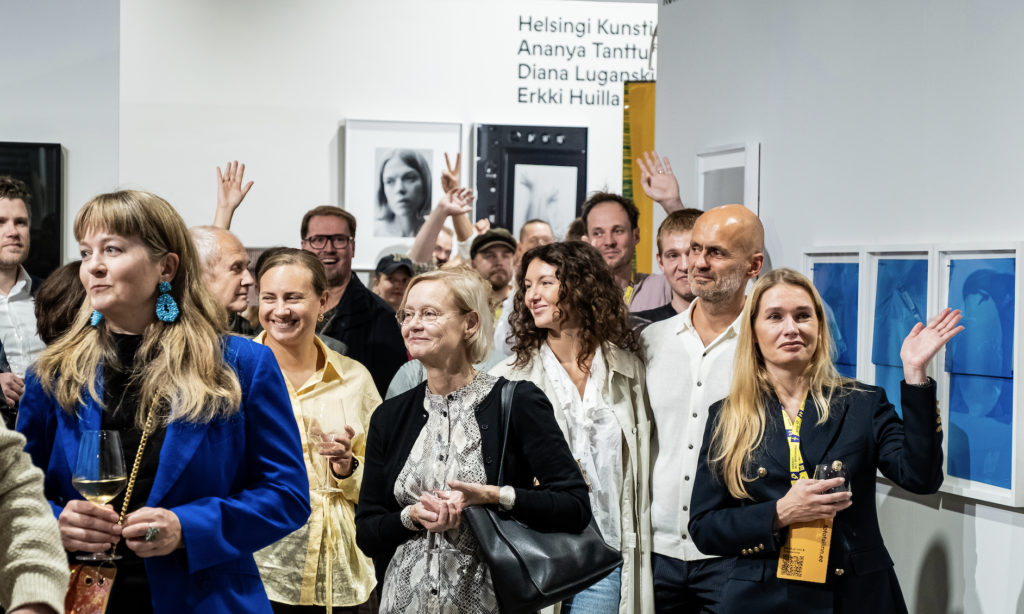
The international contemporary art fair Foto Tallinn 2026, held at Kai Art Center from 18–20 September, broke records across every category. Over three days, audiences had the opportunity to discover works by 45 artists from 15 countries and take part in a diverse public programme. The majority of participating artists and gallerists were present, alongside art professionals and members of the jury, who had selected the participants from a record number of applications earlier this year.
Estonia’s only contemporary art fair, Foto Tallinn, took place for the twelfth time this year, running from Friday to Sunday at Kai Art Center. This major three-day event, dedicated to the best of contemporary photographic art from recent years, attracted thousands of art lovers, hundreds of international visitors from Greece to Iceland, and highly regarded journalists from abroad, including those from France and Italy.
For the biennial art fair, the jury selected 16 galleries and 15 independently exhibiting artists from a record number of applicants. In total, Foto Tallinn 2026 presented the work of 45 artists from 15 countries. The programme included 11 private events for art collectors, 15 events open to the public, and three events for artists and gallerists.
Compared with the 2024 edition, Foto Tallinn 2026 doubled its visitor numbers. A total of 48 works by 20 different artists were sold, while turnover increased by 62%. Foto Tallinn 2026 offered an overview of outstanding contemporary photographic practices from around the world, with works priced between €333 and €8,172.
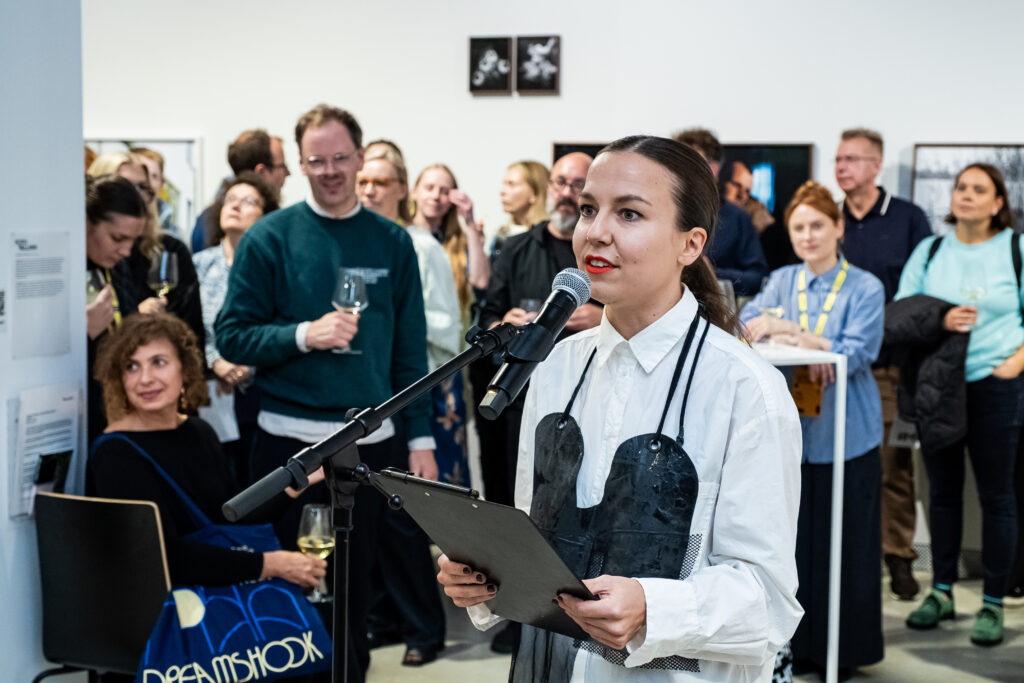
“Rather than focusing on increasing scale, Foto Tallinn consciously invests in quality, creating a curated presentation with uncompromisingly high standards. The overwhelmingly positive feedback from the collectors and international art experts who visited the fair confirmed that, as a team, we achieved the goals we had set ourselves,” said Kadi-Ell Tähiste, Executive Director of Foto Tallinn.
“I believe that an international event of this profile, which has received such a strong positive response, creates significant value for the country as a whole, for the region, and, of course, for the wider arts and cultural field,” she added.
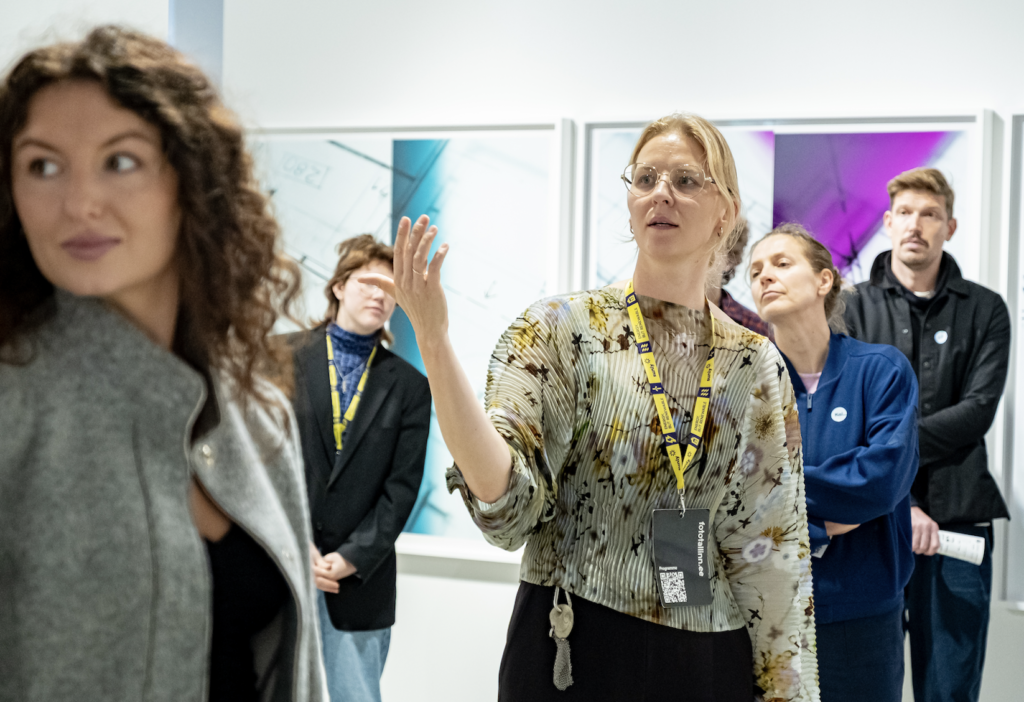
The artistic director of Foto Tallinn 2026, Lilian Hiob-Küttis, highlighted how broad the concept of photographic thinking has become, and noted a strong movement in contemporary photography back towards materiality and technical craftsmanship. She described this as a certain counterpoint to rapidly consumed and produced commercial imagery and digital culture: “The fair presented a wide range of approaches, from documentary and staged photography to abstract images, found materials, objects, installations, and experimental techniques. All of the works were notable for their exceptionally high level of contemporary artistic practice.”
“I think one of Foto Tallinn’s important roles is to show what we understand by photographic art in the first place, and to demonstrate that photography does not necessarily have to mean documenting something that already exists, or producing a photographic image in the conventional sense of a picture on a wall,” explained Lilian Hiob-Küttis.
“Photographic thinking can also manifest itself in an installation, sculpture, book, space, material, or in the way an image is produced and presented. Foto Tallinn does not define photography too narrowly, but instead shows just how much is possible within the medium. That is precisely what makes photography so fascinating: the question is no longer only what photography depicts, but what photographic thinking itself makes possible.”
Foto Tallinn 2026 took place at Kai Art Centre from 18–20 September.
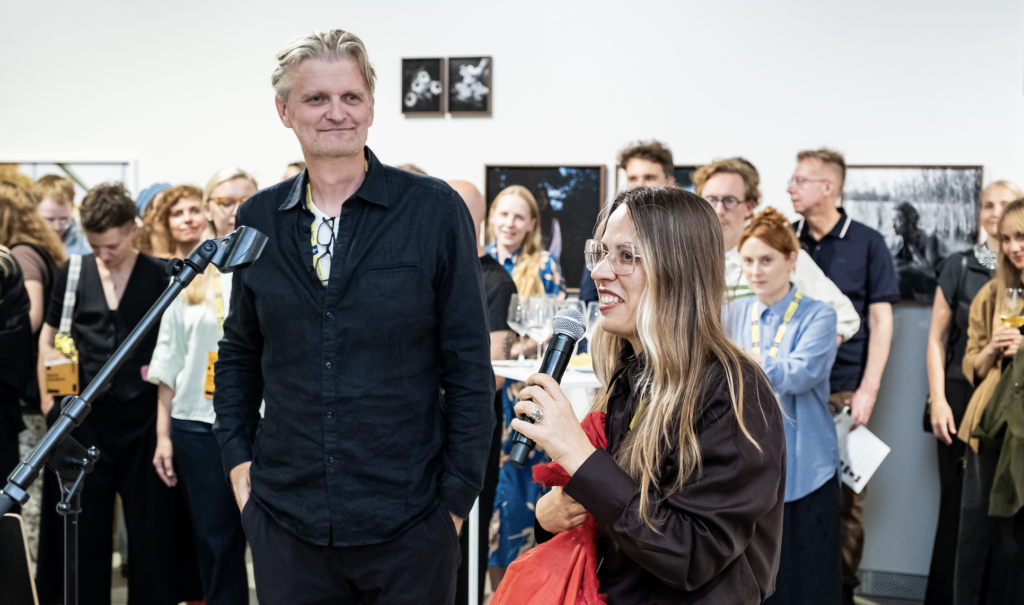
As part of the fair, Sarah Stone was announced as the recipient of the Artproof Production Award. Long-standing supporter of contemporary art Sunly acquired works by Sigrid Viir, represented by Temnikova & Kasela Gallery, and Līga Spunde, represented by Kogo Gallery, for its corporate art collection.
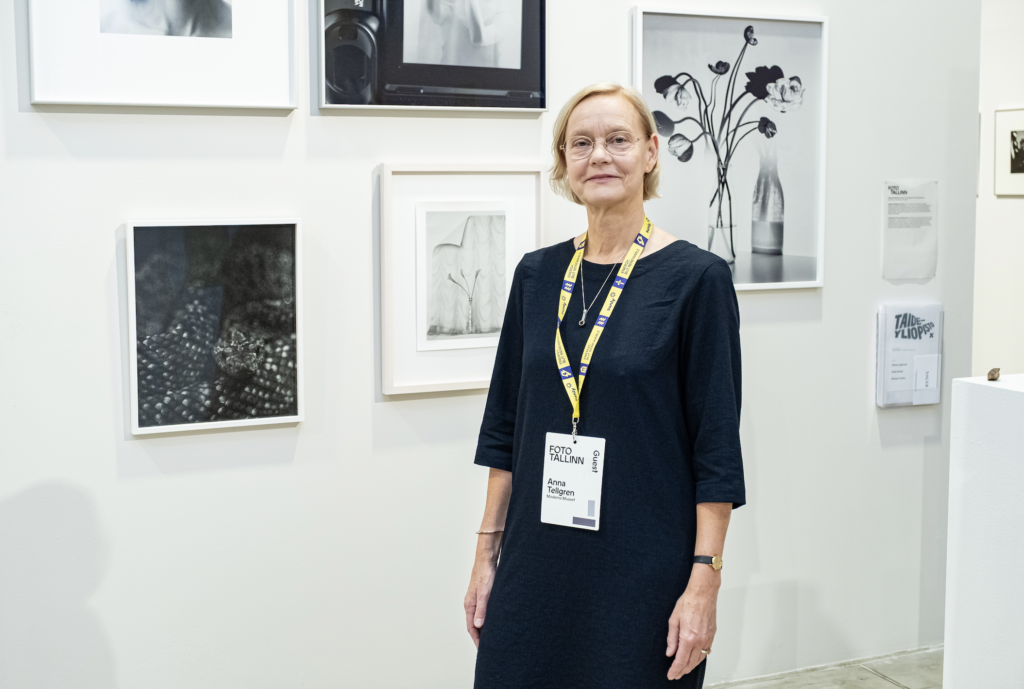
The jury of Foto Tallinn 2026 comprised Anna Tellgren (Moderna Museet, Stockholm), Jeppe Ugelvig (New York), Margot Samel (New York), Sara Giuliattini (Polycopies, Paris), and the artistic director of Foto Tallinn 2026, Lilian Hiob-Küttis.
The public programme featured Anna Tellgren (Moderna Museet), Sara Giuliattini (Polycopies), Kadi-Ell Tähiste, Lilian Hiob-Küttis, Priit Lepasepp (Sunly), Monika Kallas-Anton (SEB), Taivi Koitla, Sakari Tervo, Indrek Grigor, Hedi Jaansoo, Elina Drake, as well as numerous artists and other art professionals.
The following galleries and artists participated in Foto Tallinn 2026:
ALMA & (LV): Rasa Jansone (LV), Vika Eksta (LV)
ASNI (LV): Agate Tūna (LV)
Drifts (LT): Janina Sabaliauskaitė (LT/UK)
FOKU Gallery (EE): Johanna Adojaan (EE), Roman-Sten Tõnissoo (EE), Tanja Muravskaja (EE), Tuukka Kaila (FI/EE)
Gallery Halmetoja (FI): Antti J. Leinonen (FI), Elina Brotherus (FI)
Helsinki Contemporary (FI): Emma Sarpaniemi (FI)
ISSP Gallery (LV): MAREUNROL’S (LV), Rūta Kalmuka (LV)
Kogo Gallery (EE): Kristina Õllek (EE), Līga Spunde (LV)
Maksla XO (LV): David Penny (UK), Roman Korovin (LV)
Punctum Gallery (EE): Joosep Kivimäe (EE), Kristine Krauze-Slucka (LV)
SIC (FI): Sauli Sirviö (FI)
Temnikova & Kasela Gallery (EE): Flo Kasearu (EE), Krista Mölder (EE), Sigrid Viir (EE)
The Academy of Fine Arts, Helsinki / Uniarts Helsinki (FI): Ananya Tanttu (FI), Diana Luganski (FI), Erkki Huilla (FI)
TOBE Gallery (HU): Kincső Bede (RO)
Tütar Gallery (EE): Dénes Farkas (EE/HU)
Vasli Souza (NO): Hilla Kurki (FI), Taavi Rekkaro (EE)
Independently exhibiting artists
Bob Bicknell-Knight (UK/EE), Elena Kristofor (UA/AT), Francesca Marengo (IT/UK), Gedvile Tamosiunaite (LT/DE), Jói Kjartans (IS/NO), Liina Leo (EE), Maria Kapajeva (EE/UK), MAryam Touzani (MA/NL), Mia Dudek (PL/PT), Naguel Rivero (AR/FR), Paul Kuimet (EE), Sarah Stone (UK/BE), Saskia Reis (DE), Sofia Runarsdotter (SE), Thordis Wolf (AT).
Held biannually, the international art fair Foto Tallinn presents jury-selected artists and galleries showcasing the latest contemporary photographic art, offering collectors and art audiences rare access to new artwork, new ideas, and the people behind the art. Foto Tallinn – shaping the future of photographic art.
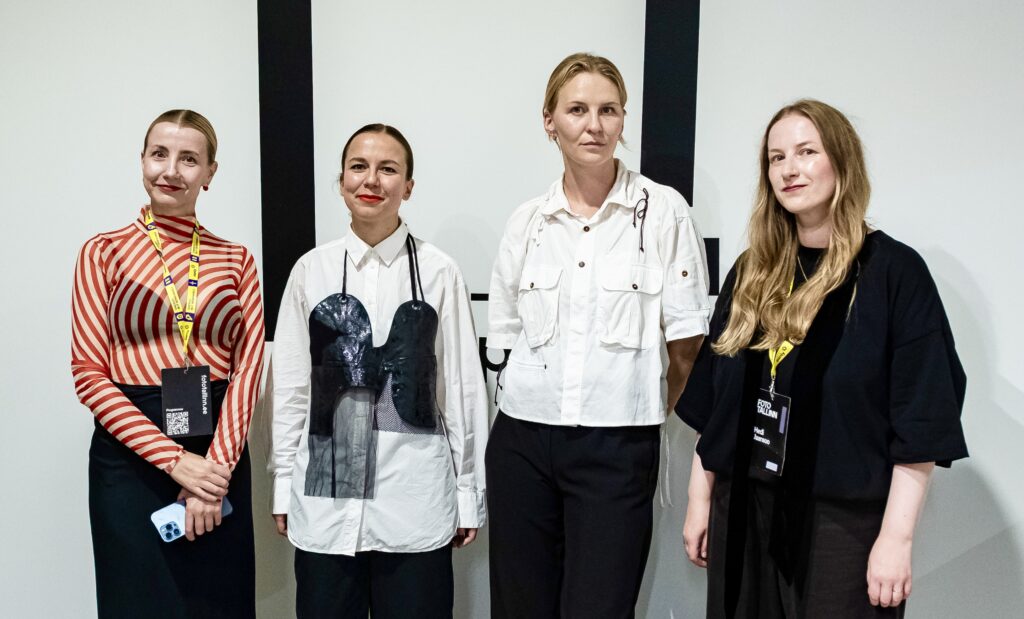
Foto Tallinn is organized by Foto Tallinn, the Estonian Union of Photography Artists / FOKU, and the Estonian Contemporary Art Development Center / Kai Art Center. Foto Tallinn 2026 was supported by Sunly, Sorainen, Artproof, FedEx, the Cultural Endowment of Estonia, Tallinn and co-funded by the European Union. Foto Tallinn 2026 partners: AkzoNobel, Hotel Telegraaf, Radisson Collection Tallinn, Hotel Palace Tallinn, Nunne Boutique Hotel, Hyatt Place, Bob W., Tallink, Põhjala Brewery, Prike.
Photos: Aron Urb
PHOTO GALLERY: Foto Tallinn 2026 is open from 18–20 September at Kai Art Center
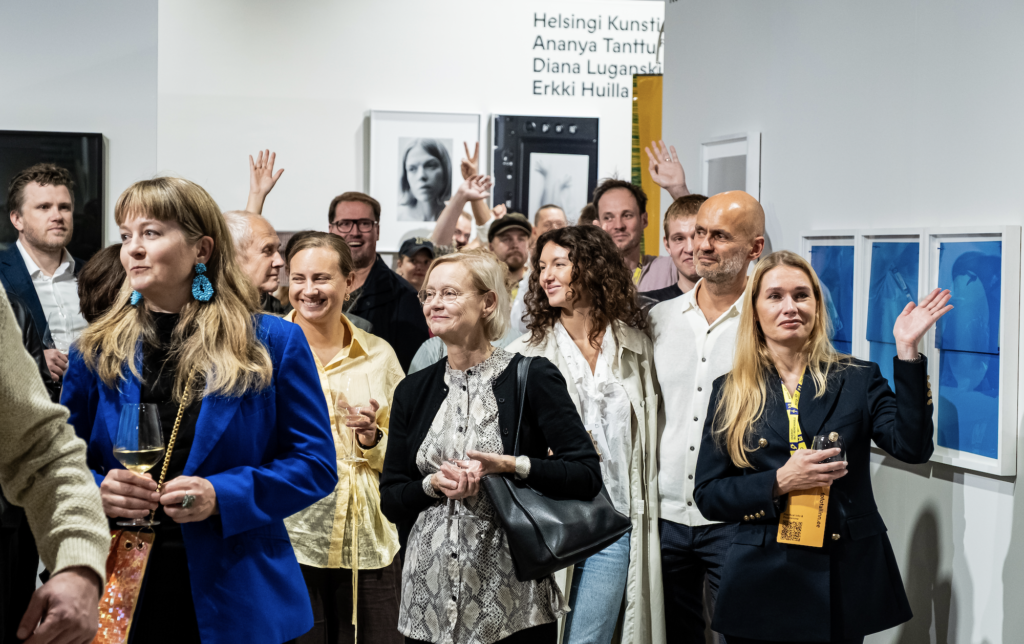
For three days only, from 18–20 September, Kai Art Center hosts Foto Tallinn 2026, Estonia’s only international art fair. The fair brings audiences the best of contemporary photographic art selected by an international jury, representing 15 countries. The work of 45 artists is on view, with most of the artists and gallerists present to introduce and discuss the works. The fair also features a special programme for art collectors, as well as a public programme of 15 events including tours, discussions, and conversations.
At the opening evening of Foto Tallinn 2026, Sarah Stone was announced as the recipient of the Artproof Production Grant. Sunly, a long-standing supporter of contemporary art, selected works by Sigrid Viir (Temnikova & Kasela Gallery) and Līga Spunde (Kogo Gallery) for its art collection.
PHOTO GALLERY, photos by Aron Urb
For three days, from Friday to Sunday, Foto Tallinn, Estonia’s major contemporary art event held every two years, offers audiences an overview of developments in photographic art in recent years and the most notable works in the field. Visitors can meet artists and art professionals and engage in discussions about the current state of contemporary art and its future potential. More than 200 diverse artworks, artists, and gallerists from 15 countries, and a wide-ranging public programme are open to visitors at Kai Art Center from 18–20 September.
Among the contemporary art experts and collectors taking part in the 15 events of the Foto Tallinn 2026 public programme are Anna Tellgren from Moderna Museet, Sara Giuliattini, Stella and Tõnu Runnel, Priit Lepasepp, Lilian Hiob-Küttis, Sakari Tervo, Kadi-Ell Tähiste, and Monika Kallas-Anton.
Foto Tallinn takes place every two years and is being held for the 12th time this year. From a record number of applicants, an international jury selected 16 art galleries and 15 individually participating artists. In total, the fair presents works by 45 artists from 15 countries.
The jury for Foto Tallinn 2026 comprised Anna Tellgren (Moderna Museet, Stockholm), Jeppe Ugelvig (New York), Margot Samel (New York), Sara Giuliattini (Polycopies, Paris), and Lilian Hiob-Küttis, Artistic Director of Foto Tallinn 2026.
Galleries and artists participating in Foto Tallinn 2026
ALMA & (LV): Rasa Jansone (LV), Vika Eksta (LV)
ASNI (LV): Agate Tūna (LV)
Drifts (LT): Janina Sabaliauskaitė (LT/UK)
FOKU Gallery (EE): Johanna Adojaan (EE), Roman-Sten Tõnissoo (EE), Tanja Muravskaja (EE), Tuukka Kaila (FI/EE)
Gallery Halmetoja (FI): Antti J. Leinonen (FI), Elina Brotherus (FI)
Helsinki Contemporary (FI): Emma Sarpaniemi (FI)
ISSP Gallery (LV): MAREUNROL’S (LV), Rūta Kalmuka (LV)
Kogo Gallery (EE): Kristina Õllek (EE), Līga Spunde (LV)
Maksla XO (LV): David Penny (UK), Roman Korovin (LV)
Punctum Gallery (EE): Joosep Kivimäe (EE), Kristine Krauze-Slucka (LV)
SIC (FI): Sauli Sirviö (FI)
Temnikova & Kasela Gallery (EE): Flo Kasearu (EE), Krista Mölder (EE), Sigrid Viir (EE)
The Academy of Fine Arts, Helsinki / Uniarts Helsinki (FI): Ananya Tanttu (FI), Diana Luganski (FI), Erkki Huilla (FI)
TOBE Gallery (HU): Kincső Bede (RO)
Tütar Gallery (EE): Dénes Farkas (EE/HU)
Vasli Souza (NO): Hilla Kurki (FI), Taavi Rekkaro (EE)
Independently exhibiting artists
Bob Bicknell-Knight (UK/EE), Elena Kristofor (UA/AT), Francesca Marengo (IT/UK), Gedvile Tamosiunaite (LT/DE), Jói Kjartans (IS/NO), Liina Leo (EE), Maria Kapajeva (EE/UK), MAryam Touzani (MA/NL), Mia Dudek (PL/PT), Naguel Rivero (AR/FR), Paul Kuimet (EE), Sarah Stone (UK/BE), Saskia Reis (DE), Sofia Runarsdotter (SE), Thordis Wolf (AT).
Foto Tallinn 2026 takes place from 18–20 September at Kai Art Center. Information about participants and the public programme:
www.fototallinn.ee
Held biannually, the international art fair Foto Tallinn presents jury-selected artists and galleries showcasing the latest contemporary photographic art, offering collectors and art audiences rare access to new artwork, new ideas, and the people behind the art. Foto Tallinn – shaping the future of photographic art.
Foto Tallinn is organized by Foto Tallinn, the Estonian Union of Photography Artists / FOKU, and the Estonian Contemporary Art Development Center / Kai Art Center. Foto Tallinn 2026 is supported by Sunly, Sorainen, Artproof, FedEx, the Cultural Endowment of Estonia, Tallinn and co-funded by the European Union.
INTERVIEW ⟩ 10 minutes with Lilian Hiob-Küttis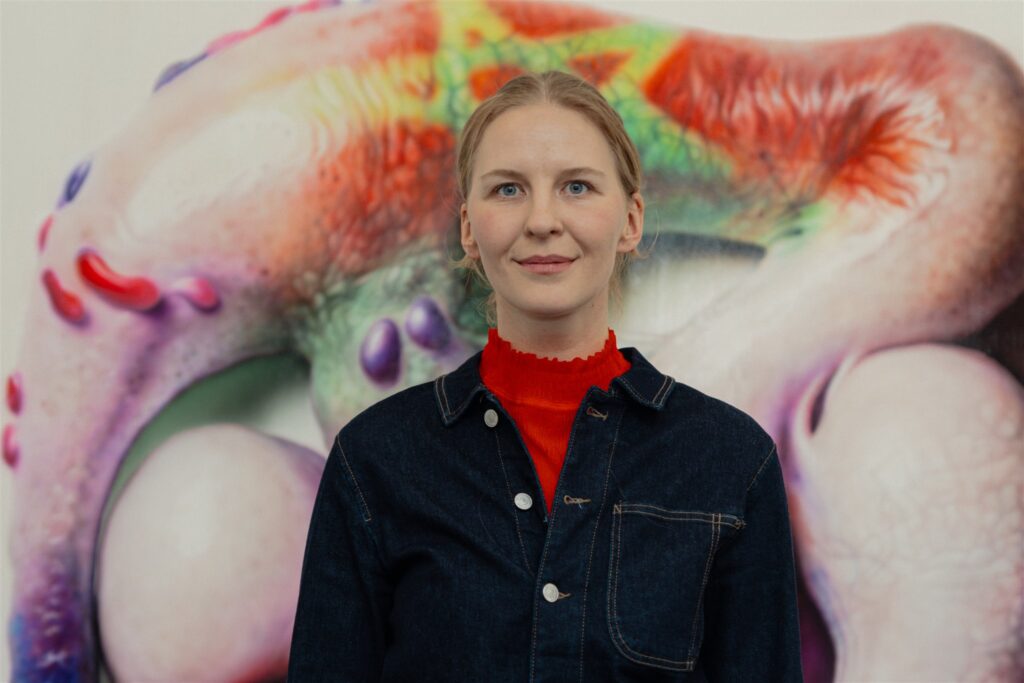
/ Džūlija Rodenkirhena / Interview
Foto Tallinn coming soon. 10 minutes with Lilian Hiob-Küttis
Foto Tallinn 2026 will take place at the Kai Art Center from 18–20 September and will present works by 45 artists from 15 countries, represented by 16 galleries and 15 independently exhibiting artists. A special programme for art collectors will run alongside a 15-event public programme featuring a diverse range of tours, discussions, and conversations.
According to the Artistic Director of Foto Tallinn 2026, Lilian Hiob-Küttis, in an unprecedented age of image overconsumption, stories that resist dominant visual and ideological patterns have become increasingly important. A critical relationship with truth and narrative is gaining significance, as is the question of how a personal point of view shapes our understanding of reality. “Identity, upbringing, community, family stories and personal mythologies, as well as the unease and strangeness of the world we inhabit – all of these find artistic expression at Foto Tallinn in different ways.”
Estonia’s only art fair dedicated to photographic art, Foto Tallinn takes place every two years and will be held for the 12th time this year. More than 90 international guests are expected to attend Foto Tallinn, including art collectors, representatives of museums, exhibition institutions, and art foundations, as well as journalists. Participating gallerists and artists will be on site to introduce the works on display. The jury for Foto Tallinn 2026 comprised Anna Tellgren (Moderna Museet, Stockholm), Jeppe Ugelvig (New York), Margot Samel (New York), Sara Giuliattini (Polycopies, Paris), and Lilian Hiob-Küttis, Artistic Director of Foto Tallinn 2026.
Representing Latvia will be Vika Eksta and Rasa Jansone (ALMA Gallery), Agate Tūna (ASNI), MAREUNROLS and Rūta Kalmuka (ISSP Gallery), Romāns Korovins, and British artist David Penny (Māksla XO). Estonian galleries will present works by Kristīne Krauze-Slucka (Punctum) and Līga Spunde (Kogo Gallery).
Lilian Hiob-Küttis, Artistic Director of Foto Tallinn, is a curator and art advisor. In Latvia, her work could be seen at ASNI Gallery, where the exhibition Shifting Sand, which she curated, was on view in 2024.
This year’s selection process has been marked by a much higher number of applications than in previous years. What surprised you most about what artists are doing with photography right now?
There is a strong sense of individual authorship. Artists are using photography to construct their own visual and conceptual worlds rather than trying to fit into an established aesthetic.
I also see a very strong return to the specifics of the medium: developing film, printing, sequencing, framing, experimenting with processes and materials. At a time when images can be generated and circulated almost instantly, there is something compelling about artists who are deeply invested in the craft of making an image.
At the same time, many of the works are dealing with very personal material: identity, family histories, memory, origins, and personal mythologies, alongside the more general uncanniness of the world we currently inhabit. The results can be very different formally, but there is a shared sense of artists trying to understand the world on their own terms.
You work across Estonian and international art contexts. What do you think is distinctive about the photographic practices emerging from Estonia and the wider Baltic region?
I think there is a growing confidence in the region around claiming our own histories, identities, and visual languages, rather than trying to fit ourselves into a Western canon. We are here, we have our own histories and cultural references, and artists are increasingly treating these as material rather than something that needs to be translated or legitimised elsewhere.
What I find compelling is precisely this combination of specificity and openness. The Baltic region has a particular historical and cultural complexity, but the strongest artists don’t necessarily illustrate that history. They absorb these histories and rework them into something distinctly personal, contemporary, and formally unexpected. I don’t think we need to position the Baltic scene as an alternative to the West. We are part of the broader contemporary art discourse, and we are contributing to what that discourse becomes.
How would you describe the typical Foto Tallinn visitor, and how has that changed over the years?
I think the Foto Tallinn audience is becoming increasingly diverse, with a strong presence of collectors and people who already have a deep interest in photography, but also artists, designers, teachers, students, and people who simply want to understand what is happening in the field right now.
This year, we have made a particular effort to bring more regional professionals to the fair, as well as international press. We have been working specifically to strengthen Foto Tallinn’s role as a meeting point for professionals from across the region and to create more opportunities for exchange between local, regional, and international audiences.
That is important to me. I don’t think a photography fair should only speak to an established collecting audience. It should also be a place where someone can encounter photography seriously for the first time, while also offering professionals a meaningful context for discovering artists, building connections, and discussing the wider field.
And perhaps the most interesting thing is that the audience is becoming more confident and engaged. People are willing to ask questions, to look beyond what is immediately familiar, and to discover artists they didn’t know before. That curiosity, together with the presence of a strong professional community, is exactly what a fair should encourage.
The program also includes a discussion titled What Does a Museum Do to a Photograph? What motivated this choice, and what will be the main topics of discussion?
Photography has a complicated relationship with the institution. The same image can function very differently as a family photograph, a document, a newspaper image, an artwork in a gallery, or an object in a museum collection. The institutional context changes how we understand its value, authorship, and meaning.
That is what interests me in this discussion, which will take place between Anna Tellgren, curator of photography at Moderna Museet, and Indrek Grigor, Head of the Exhibitions Department at Tartu Art Museum. Together, they will consider what happens to a photograph when it enters a museum: how it is collected, preserved, displayed, and contextualised, and what happens to its material and historical meaning when it moves from one context into another.
These questions also extend to the broader visual culture of the present: commercial photography, family archives, social media, video games, and other forms of image-making that museums have traditionally treated as peripheral or have not yet learned how to preserve. They raise difficult questions about selection, authority, resources, and historical distance.
And also, what does the museum make visible, and what does it leave out? Museums can preserve and legitimise forms of knowledge, but they can also create the impression that photographic history exists only within institutional collections. I think it is essential to remain attentive to the histories that survive elsewhere – in private collections, family albums, personal memories, oral histories, and archives that have not yet entered the museum.
In your opinion, what are the prerequisites for saying that Foto Tallinn has been successful – both in the short term and the long term?
In the short term, the fair needs to work for the people who make it possible: the galleries and artists need to have a good fair, collectors need to find work they genuinely want to live with, and the public needs to feel that there was something worth coming to see. Those things are connected.
But I think the longer-term measure is whether Foto Tallinn can contribute to the development of the photographic field in the region. Whether it can bring artists, galleries, collectors, and institutions into meaningful contact, introduce international audiences to Baltic and Nordic practices, and perhaps change the way photography is understood and collected here.
For me, success means creating something that has a lasting impact. It is about whether, after a few years, we can look back and say that Foto Tallinn helped create a stronger ecosystem around photography in the region.
Foto Tallinn 2026: the best of contemporary photographic art, with artists from 15 countries
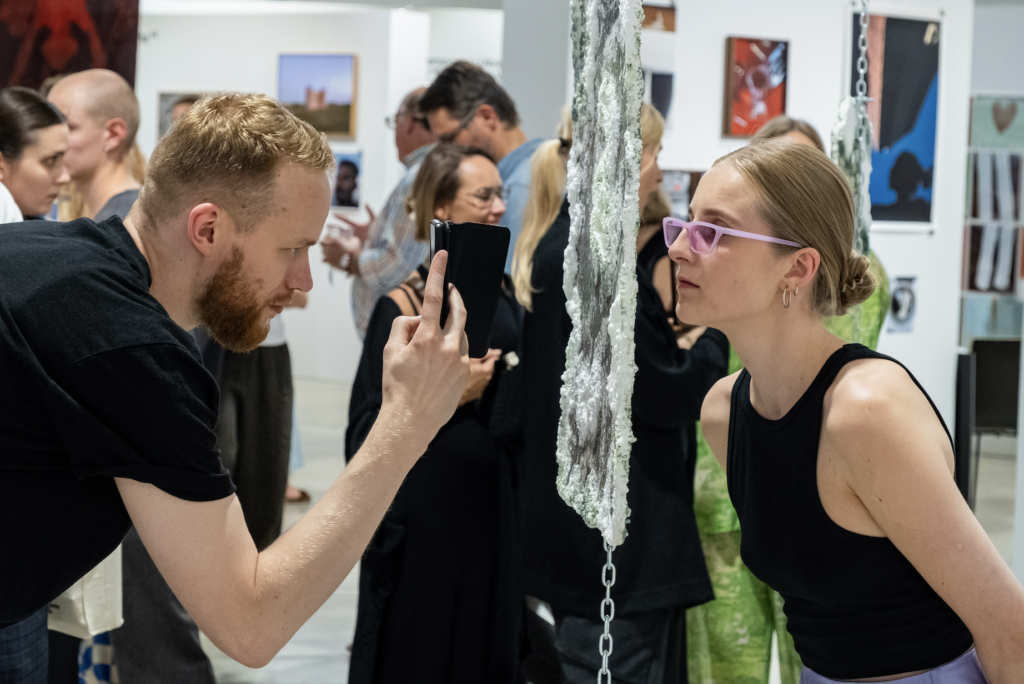
Foto Tallinn 2024, photo by Aron Urb
The major contemporary art event Foto Tallinn will bring audiences a selection of the best recent photographic art, chosen from a record number of applicants by an international jury of leading experts, alongside a rich programme for art collectors, enthusiasts and professionals in the field. Foto Tallinn 2026 will take place at Kai Art Center from 18–20 September and will present works by 45 artists from 15 countries. The fair will feature 16 galleries and 15 independently exhibiting artists. A special programme for art collectors will run alongside a 15-event public programme of diverse tours, discussions, and conversations. More than 90 international guests are expected to attend, while participating gallerists and artists themselves will be on site to present the works.
“Photography is a complex medium, and I believe that is precisely what makes it particularly valuable today,” says Lilian Hiob-Küttis, Artistic Director of Foto Tallinn 2026. “It gives us an opportunity to develop our critical thinking: what has been staged, what actually happened, what has been manipulated, and what has been artificially generated? These things are not necessarily obvious at first glance. Understanding an image often depends on whether we know something about its author, its narrative, its history and its cultural references,” she adds.
Estonia’s only art fair dedicated to photographic art, Foto Tallinn takes place every two years and will be held for the 12th time this year. From a record number of applicants, an international jury selected 16 art galleries and 15 independently exhibiting artists. Altogether, the fair will present works by 45 artists from 15 countries. More than 90 international guests are expected at Foto Tallinn, including art collectors, representatives of museums, exhibition institutions and art foundations, as well as journalists. Participating gallerists and artists will be on site to introduce the works on display.
“Each edition is shaped by a different international expert jury, giving the art fair its own character while reflecting the current state and future directions of photographic art internationally and ensuring a high level of quality for audiences,” says Kadi-Ell Tähiste, Director of Foto Tallinn. “Art fairs are a highly valued format around the world. They offer audiences a concise overview of the latest developments in the art field, as well as the opportunity to meet gallerists and artists directly,” Tähiste explains.
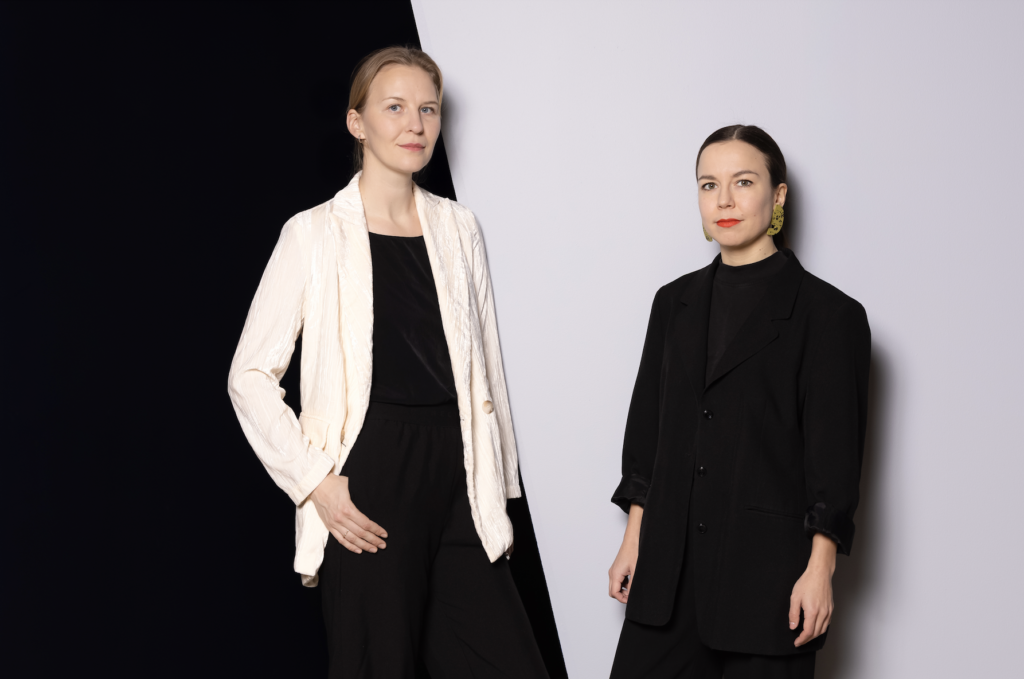
Lilian Hiob-Küttis & Kadi-Ell Tähiste, photo by Laura Arum-Lääts
The artists selected for this year’s Foto Tallinn, taking place at Kai Art Center from 18–20 September, are characterised by clearly defined photographic practices, strong narrative frameworks and distinctive visual languages.
According to Lilian Hiob-Küttis, in an unprecedented age of image overconsumption, stories that resist dominant visual and ideological patterns have become increasingly important. A critical relationship with truth and narrative is gaining significance, as is the question of how a personal point of view shapes our understanding of reality. “Identity, upbringing, community, family stories and personal mythologies, as well as the unease and strangeness of the world we inhabit — all of these find artistic expression at Foto Tallinn in different ways.”
The jury for Foto Tallinn 2026 comprised Anna Tellgren (Moderna Museet, Stockholm), Jeppe Ugelvig (New York), Margot Samel (New York), Sara Giuliattini (Polycopies, Paris), and Lilian Hiob-Küttis, Artistic Director of Foto Tallinn 2026.
Galleries and artists participating in Foto Tallinn 2026
ALMA & (LV): Rasa Jansone (LV), Vika Eksta (LV)
ASNI (LV): Agate Tūna (LV)
Drifts (LT): Janina Sabaliauskaitė (LT/UK)
FOKU Gallery (EE): Johanna Adojaan (EE), Roman-Sten Tõnissoo (EE), Tanja Muravskaja (EE), Tuukka Kaila (FI/EE)
Gallery Halmetoja (FI): Antti J. Leinonen (FI), Elina Brotherus (FI)
Helsinki Contemporary (FI): Emma Sarpaniemi (FI)
ISSP Gallery (LV): MAREUNROL’S (LV), Rūta Kalmuka (LV)
Kogo Gallery (EE): Kristina Õllek (EE), Līga Spunde (LV)
Maksla XO (LV): David Penny (UK), Roman Korovin (LV)
Punctum Gallery (EE): Joosep Kivimäe (EE), Kristine Krauze-Slucka (LV)
SIC (FI): Sauli Sirviö (FI)
Temnikova & Kasela Gallery (EE): Flo Kasearu (EE), Krista Mölder (EE), Sigrid Viir (EE)
The Academy of Fine Arts, Helsinki / Uniarts Helsinki (FI): Ananya Tanttu (FI), Diana Luganski (FI), Erkki Huilla (FI)
TOBE Gallery (HU): Kincső Bede (RO)
Tütar Gallery (EE): Dénes Farkas (EE/HU)
Vasli Souza (NO): Hilla Kurki (FI), Taavi Rekkaro (EE)
Independently exhibiting artists
Bob Bicknell-Knight (UK/EE), Elena Kristofor (UA/AT), Francesca Marengo (IT/UK), Gedvile Tamosiunaite (LT/DE), Jói Kjartans (IS/NO), Liina Leo (EE), Maria Kapajeva (EE/UK), MAryam Touzani (MA/NL), Mia Dudek (PL/PT), Naguel Rivero (AR/FR), Paul Kuimet (EE), Sarah Stone (UK/BE), Saskia Reis (DE), Sofia Runarsdotter (SE), Thordis Wolf (AT).
Foto Tallinn 2026 takes place from 18–20 September at Kai Art Center. Information about participants and the public programme:
www.fototallinn.ee
Held biannually, the international art fair Foto Tallinn presents jury-selected artists and galleries showcasing the latest contemporary photographic art, offering collectors and art audiences rare access to new artwork, new ideas, and the people behind the art. Foto Tallinn – shaping the future of photographic art.
Foto Tallinn is organized by Foto Tallinn, the Estonian Union of Photography Artists / FOKU, and the Estonian Contemporary Art Development Center / Kai Art Center. Foto Tallinn 2026 is supported by Sunly, Sorainen, Artproof, FedEx, the Cultural Endowment of Estonia, Tallinn and co-funded by the European Union.
Press images
Foto Tallinn 2026 — team
Foto Tallinn 2026 — jury
Foto Tallinn 2026 — selection of works presented at the fair
Selection of photographs from the previous Foto Tallinn art fair — photo selection
INTERVIEW ⟩ Lilian Hiob-Küttis: What Is Real?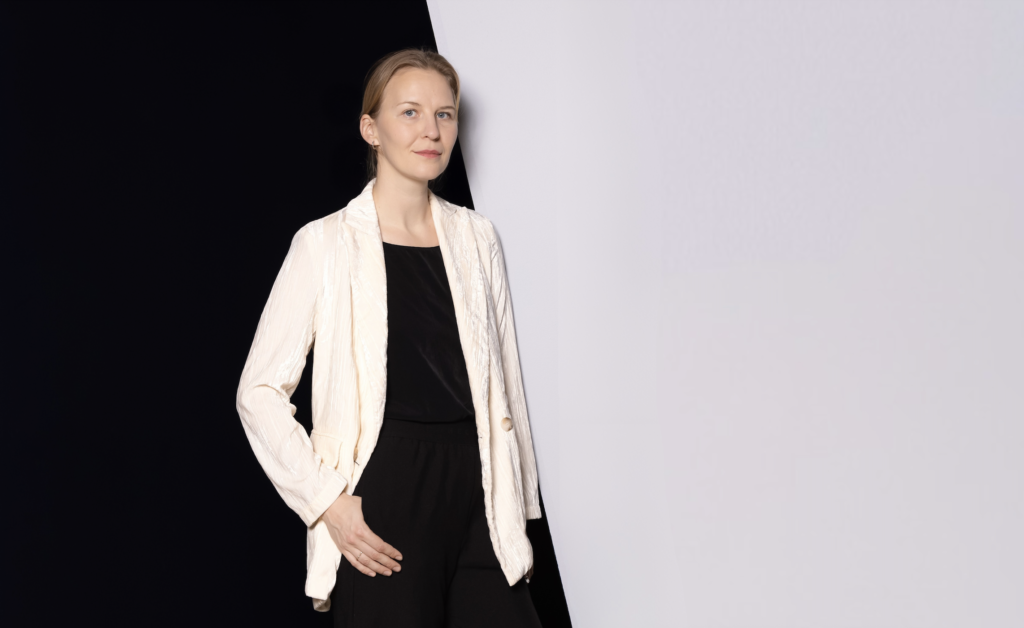
Lilian Hiob-Küttis, photo by Laura Arum-Lääts
An interview by Sergej Timofejev in Arterritory with Lilian Hiob-Küttis, Artistic Director of the Foto Tallinn 2026 Art Fair. “Photography is a complicated medium, and I think that makes it particularly valuable today. It gives us a way to exercise our critical thinking skills: What is staged, what is documentary, what is real, and what has been manipulated or generated?” she says.
Foto Tallinn 2026, Estonia’s only international art fair dedicated to contemporary photography, will take place from 18–20 September 2026 at Kai Art Center in Tallinn. Held biennially, the fair brings together artists, galleries, collectors, curators and photography enthusiasts around the latest developments in photographic art. The 2026 edition was selected by an international jury comprising Anna Tellgren of Moderna Museet in Stockholm, curator and critic Jeppe Ugelvig, New York gallerist Margot Samel, Polycopies co-director Sara Giuliattini, and artistic director Lilian Hiob-Küttis. The selection process attracted a record number of applications, reflecting both the growing international profile of the fair and the diversity of contemporary photographic practices.
How do you see the role of a photography fair changing today, when photography exists simultaneously as a fine-art medium, a commercial image, a digital file, and an increasingly AI-generated form?
When I think about the role of a photography fair today, I see it within the wider context of the contemporary art fair landscape. We have fairs such as Art Rotterdam/Unseen, Paris Photo and Photo London, and although I don’t necessarily think that every medium needs its own separate fair, it makes sense when it comes to photography. Concentrating on a specific medium allows you (as an organiser, participant or visitor) to really dig into its particularities, and, perhaps even more importantly, to get deeper into the authors and their individual microcosmos.
I find this particularly important at a time when images circulate constantly through the media and online, often detached from their original source and from the person who made them. Fine-art photography, editorial photography, documentary photography and AI-generated images may all look like “images”, but they serve very different purposes and operate within very different contexts. We consume all of them, often within the same visual environment.
What a photography fair can offer is the opportunity to slow that process down: to concentrate on an image, or a series of images, and consider the pattern of thought behind it, the technique, the materiality, the author and the context in which it was made. It creates a space for intellectual and cultural dialogue, and for following a chain of thought that can easily get lost when images are encountered in an endless online stream.
Photography is a complicated medium, and I think that makes it particularly valuable today. It gives us a way to exercise our critical thinking skills: What is staged, what is documentary, what is real and what has been manipulated or generated? These things are not necessarily apparent at first glance. Understanding an image often depends on knowing something about its author, its narrative, the history and cultural references.
Photography allows us to think of what an image is, who made it, why it was made, and how we are being directed to see it. With painting, we more readily accept that it is a constructed interpretation, with photography, we can still fall into the assumption that it represents reality.
You emphasise “rigorous photographic practices, strong narrative frameworks, and distinctive visual languages.” What do these qualities mean to you in practice, and what makes a photographic project stand out today?
These are qualities I look for in art more generally, but in photography the specifics of making an image can be incredibly finely tuned. Many photographers I know are almost obsessive about their medium, they are craftsmen and masters of it. In a time when images can be produced and circulated almost frictionlessly, that level of attention, skill and physical knowledge of the medium feels increasingly significant.
Strong narratives and distinctive visual languages are equally important. We are living through an unprecedented overconsumption of images, and also all the other forms of overconsumption, and this makes it even more important to encounter stories that resist the dominant visual and ideological patterns. Personal histories, family stories, visions of different ways of being, stories of origin, and perspectives from people and places that rarely enter our everyday media or algorithmic feeds. These pockets of otherness I find particularly valuable in photography today.
You have said that photography should be understood as an integral part of the art canon. Do you feel that photography has already fully entered the contemporary art discourse, or are there still institutional and market barriers to overcome?
Honestly, I think photography has already firmly entered the contemporary art canon. If you look at major institutions and foundations like MoMA, Tate, The Met, Centre Pompidou, photography is an integral part of their collections, exhibitions and research.
There are still some market-specific challenges, particularly around how photographic editions are valued compared to unique works, how their pricing is understood, and how collectors perceive the value of owning a photograph in an edition. But I also see this as an advantage: because photographs are often editioned, they can be more accessible in price than unique works. Collectors are comfortable buying editioned prints and graphic works, so I don’t really see why collecting photography should feel any more intimidating.
As for AI-generated images entering institutional collections as photography, I hope that never happens. Although, knowing how quickly things change, I suspect this sentence may age rather badly.
This edition looks at both the trajectories that have shaped photographic practice over the past five years and its future directions. What changes in photography do you think have been the most significant during this period?
I think one of the most significant shifts has been a more critical relationship to truth and narrative. Not necessarily through grand political narratives, but through a growing insistence on subjectivity. On looking at the world through one’s own eyes and constructing a personal universe from it. Identity, upbringing, community, family histories, personal mythologies, but also the uncanniness of the world we have ended up in, all become material.
You can see this very clearly across the fair. One artist approaches it through a family archive, another through video game clocks, another through portraiture, another through a found object or melting ice cream. What connects these practices is a shared interest in how meaning is constructed through the image, rather than a common aesthetic or subject matter.
At the same time, I see relatively little interest in following the latest visual, conceptual or digital trend. Instead, there is a strong return to authorship and materiality: developing film, experimenting with printing processes, framing, sequencing. All the decisions that allow an artist to figure out how to make this vast and established medium distinctly their own.
The fair places a particular emphasis on work emerging from the region. What aspects of the Baltic and wider Eastern European photographic scene do you find especially compelling at the moment?
I think there is a growing confidence in the region around claiming our own histories, identities and visual languages, rather than trying to fit ourselves into a Western canon or measure our work against Western narratives. There is a sense of: we are here, these are our histories, and this is the work that is relevant to us. The region has its own complexities, histories and cultural references, and artists are increasingly treating this as material in their own right. I don’t mean that the Western canon needs to be rejected, but it also doesn’t need to be the framework through which everything is validated. We are part of the canon. We are producing it.
How do you balance artistic experimentation with the realities of an art fair, where works also need to communicate with collectors and the market?
I think our collectors are smart enough to trust artists, and to trust the artistic direction of the fair. The selection is made by a group of experts, including Anna Tellgren, Margot Samel, Jeppe Ugelvig and myself, so there is a strong curatorial filter behind what we present. If collectors don’t know the artists yet, I hope that trust in the selection gives them a reason to engage with the work.
Collectors are curious, intelligent and whimsical people. My obligation is to show them the most relevant and interesting contemporary photography from the region, not to anticipate what I think they might want to buy.
If the market is looking for compromise, they can go to the mall.
What do you think collectors should be paying more attention to when looking at contemporary photographic art today – beyond the image itself?
I think collectors should pay attention to their own instincts. What catches your attention? What feels meaningful or relevant to you? What do you keep returning to? Art collecting is a very personal act, and over time you are essentially building your own universe of images, narratives and references. There is no need to buy something simply because it has been validated by the market or because you think you should like it.
Of course, an artist’s CV, the context of the work and the advice from a gallerist whose judgment you trust can all be useful. But ultimately, I would put more weight on the relationship you have with the work. If you can imagine wanting to look at it again and again, that is probably a good place to start.
You have worked across galleries, art advisory, and independent curating. How have these different perspectives shaped the way you approach Foto Tallinn – and do you find yourself thinking more like a curator, a gallerist, or an advisor when making decisions for the fair?
I think those different perspectives are extremely useful in my role as artistic director of the fair. During the selection process, I am very much thinking like a curator, looking at the quality and relevance of the work and at how the individual artists contribute to the overall picture.
But when it comes to the wider strategy of the fair: its Baltic-Nordic focus, the VIP and public programmes, and the experience we create around the fair, I also think very much like a gallerist and an advisor. I understand what participating galleries and artists need from a fair in order for it to be valuable and successful for them.
Ultimately, it is not about me or my personal ambitions. My role is to serve the galleries and artists who participate, as well as the collectors and audiences who invest their time, expertise and money in coming to the fair. I see the artistic direction as a responsibility to all of them.
Read the full interview here.
Participants Revealed: Artworks by 45 Artists Will Be Exhibited at Foto Tallinn 2026
The contemporary photography art fair Foto Tallinn is presenting to the public the exhibitions of 16 galleries and 15 individually applied artists, selected by an international jury. In total, the fair will feature works by 45 artists, the majority of whom will be present in person to introduce their work. The Foto Tallinn 2026 jury comprised highly respected professionals from the art world: Anna Tellgren (Moderna Museet, Stockholm), Jeppe Ugelvig (New York), Margot Samel (New York), Sara Giuliattini (Polycopies, Paris), and Foto Tallinn 2026 Artistic Director Lilian Hiob-Küttis.
Foto Tallinn received a record number of applications this year, with all jury members highlighting the high standard and diverse approaches to contemporary photographic art. “The overall quality of submitted works was very high, which made the selection and evaluation process both competitive and engaging,” commented Artistic Director Lilian Hiob-Küttis. “Identity, memory, and the construction of meaning emerged as recurring themes — expressed through the direction of attention towards seemingly marginal details. This focus is particularly pertinent at a time when the overabundance of images and information has become unsettlingly intense. The artists explore how the world is structured and how the viewer’s perception and understanding of meaning are shaped,” she added.
Jury member Sara Giuliattini noted that the projects that stood out for her were those exploring fundamental questions inherent to the photographic medium: experimental approaches that challenged the very nature of photography, interrogating its own substance. “I find the final selection of participants heterogeneous and rich in its facets, covering a wide range of contemporary creative expression. The topics explored and the materials used are varied, offering exciting discoveries for art lovers and collectors,” said Giuliattini.
This year’s Foto Tallinn features a significantly greater number of commercial galleries than ever before — 16 galleries presenting works by 30 artists in total. “The participating galleries are established players on the international stage, with a strong presence at leading art fairs worldwide,” said Lilian Hiob-Küttis. Alongside the gallery selection, visitors will also have the opportunity to encounter the work of 15 independently applied artists, who will be present at the fair to introduce their artwork. “Visitors, whether collectors, curators, or art audiences, can expect a tightly curated, internationally engaged fair with a particular emphasis on Baltic and Nordic galleries and artists,” added Hiob-Küttis.
Foto Tallinn 2026 participating galleries and the artists they represent: ALMA & (LV): Rasa Jansone (LV), Vika Eksta (LV); ASNI (LV): Agate Tūna (LV); Drifts (LT): Janina Sabaliauskaitė (LT/UK); FOKU Gallery (EE): Johanna Adojaan (EE), Roman-Sten Tõnissoo (EE), Tanja Muravskaja (EE), Tuukka Kaila (FI/EE); Gallery Halmetoja (FI): Antti J. Leinonen (FI), Elina Brotherus (FI); Helsinki Contemporary (FI): Emma Sarpaniemi (FI); ISSP Gallery (LV): MAREUNROL’S (LV), Rūta Kalmuka (LV); Kogo Gallery (EE): Kristina Õllek (EE), Līga Spunde (LV); Maksla XO (LV): David Penny (UK), Roman Korovin (LV); Punctum Gallery (EE): Joosep Kivimäe (EE), Kristine Krauze-Slucka (LV); SIC (FI): Sauli Sirviö (FI); Temnikova & Kasela Gallery (EE): Flo Kasearu (EE), Krista Mölder (EE), Sigrid Viir (EE); Kaunite kunstide akadeemia / Uniarts Helsinki (FI): Ananya Tanttu (FI), Diana Luganski (FI), Erkki Huilla (FI); TOBE Gallery (HU): Kincső Bede (RO); Tütar Gallery (EE): Dénes Farkas (EE/HU); Vasli Souza (NO): Hilla Kurki (FI), Taavi Rekkaro (EE).
Independently applied artists: Bob Bicknell-Knight (UK/EE), Elena Kristofor (UA/AT), Francesca Marengo (IT/UK), Gedvile Tamosiunaite (LT/DE), Jói Kjartans (IS/NO), Liina Leo (EE), Maria Kapajeva (EE/UK), MAryam Touzani (NL/MA), Mia Dudek (PL/PT), Naguel Rivero (AR/FR), Paul Kuimet (EE), Sarah Stone (UK/BE), Saskia Reis (DE), Sofia Runarsdotter (SE), Thordis Wolf (AT).
The Foto Tallinn 2026 jury comprised Anna Tellgren (Moderna Museet, Stockholm), Jeppe Ugelvig (New York), Margot Samel (New York), Sara Giuliattini (Polycopies, Paris), and Foto Tallinn 2026 Artistic Director Lilian Hiob-Küttis.
Anna Tellgren is Head Curator, Researcher, and Lecturer in the Photography Department at Moderna Museet, Stockholm’s museum of modern and contemporary art. She has exceptionally broad expertise spanning the history of photography through to the present day, with a particular focus on the Nordic and Baltic art scenes.
Curator and cultural critic Jeppe Ugelvig writes regularly for leading specialist publications including Artforum, Frieze, and Spike Art Quarterly.
New York-based gallerist Margot Samel is one of the organisers of the Esther art fair, runs her eponymous gallery in Tribeca, and has extensive experience representing artists at major international fairs.
Sara Giuliattini is Curator, and Co-Director of Polycopies, a Paris-based publishing house dedicated to photographic art.
Foto Tallinn 2026 Artistic Director Lilian Hiob-Küttis is a curator, gallerist, and lecturer. Her international expertise draws in part from her longstanding experience at Temnikova & Kasela gallery and the art advisory firm ELLELL.
Foto Tallinn 2026 takes place from 18 to 20 September at the Kai Art Center.
Foto Tallinn is a biennial international art fair presenting works by artists and galleries selected by a jury of leading experts, bringing audiences the very latest in contemporary photographic art and offering collectors and art enthusiasts the opportunity to encounter new artworks, new ideas, and the artists themselves. Foto Tallinn — shaping the future of photographic art.
The fair is organised by Foto Tallinn, the Estonian Union of Photography Artists, and the Estonian Contemporary Art Development Center. Foto Tallinn 2026 is supported by Sorainen, Sunly, Artproof, FedEx, the Estonian Cultural Endowment, and the Tallinn Culture and Sports Department.
Foto Tallinn 2026 participants: https://fototallinn.ee/en/participants/
Echo Gone Wrong: Foto Tallinn has announced the dates for its 2026 edition
Foto Tallinn has announced the dates for its 2026 edition, and open call for applications. Photographic artists and the galleries representing them are invited to apply with works created in recent years. Applications are open to artists and galleries until 23 March 2026.
Foto Tallinn is a biannual art fair, and the only international art fair in Estonia dedicated to contemporary photography. Presenting work selected by a jury of leading Estonian and international experts, this year, it takes place from 18 to 20 September 2026 at Kai Art Center in Tallinn.
“It is rarely appropriate to begin looking toward the future with a retrospective, yet I would like to thank all the art enthusiasts and artists who participated in the previous Foto Tallinn art fair. We hope it was inspiring and rewarding — something also reflected in the numbers,” commented Kadi-Ell Tähiste, Executive Director of Foto Tallinn. “With the last edition and the upcoming fair, I believe we have further strengthened Tallinn’s position on the international art scene, which is extremely important to all of us,” she added.
The Artistic Director of Foto Tallinn 2026 is Lilian Hiob-Küttis, a renowned curator, art expert, and lecturer active on both the international and local art scenes. “Foto Tallinn 2026 aims to connect art collectors, artists, and galleries who value high-quality photographic art, strong narratives, and unique visual perspectives that resonate with viewers,” Hiob-Küttis noted. “The fair will also highlight discussions, professional networking, innovative approaches, and artistic developments that have shaped artists’ practices over the past five years — while also looking ahead to the future. Photography must be recognised as an essential part of the art canon. It is not isolated, but deeply connected to broader social and cultural developments. There is a great deal of distinctive and internationally compelling work emerging from our region’s contemporary art field, and I look forward to discovering the artists and galleries applying to the fair,” the Artistic Director added, inviting artists and galleries to participate.
The selection for Foto Tallinn 2026 is made by an international jury of leading experts.
The jury members for the fair’s 12th edition are Anna Tellgren, Jeppe Ugelvig, Margot Samel, and Sara Giuliattini.
“It is a true honour to introduce the members of the Foto Tallinn 2026 jury. They are internationally recognised experts in the art field, whose rich and diverse experience forms an exceptional whole. Among the jurors evaluating the works are representatives of highly influential institutions, voices with academic and critical perspectives, professionals with experience in contemporary and private galleries, and specialists engaged with the latest developments in contemporary photography,” says Hiob-Küttis. “This offers applying artists an excellent opportunity to come to the attention of key experts,” she added.
Anna Tellgren is Chief Curator of Photography at Moderna Museet in Stockholm, as well as a researcher and lecturer. She possesses extensive knowledge of the history of photography up to the present day, with particular focus on the Nordic and Baltic art scenes.
Curator and cultural critic Jeppe Ugelvig writes regularly for leading specialist publications such as Artforum, Frieze and Spike Art Quarterly, bringing to the jury a timely and critical perspective grounded in academic research.
New York-based gallerist and one of the organisers of the Esther art fair in New York, Margot Samel is known for discovering outstanding talents. With extensive experience representing artists at major international fairs, she assesses the potential of submitted works specifically within the context of art fairs. Originally from Estonia, Samel opened her eponymous gallery in Tribeca, New York, in May 2022.
Sara Giuliattini, Co-Director of the photography publishing house Polycopies, contributes in-depth knowledge of the history of photography and the latest developments in contemporary photographic practice.
Full article HERE.
Foto Tallinn 2026: Meet the Jury
Anna Tellgren is Curator of Photography and Head of Research at Moderna Museet in Stockholm. She possesses extensive knowledge of the history of photography up to the present day, with particular focus on the Nordic and Baltic art scenes.
She has curated numerous exhibitions including Annika Elisabeth von Hausswolff Alternative Secrecy (2021). The exhibition Francesca Woodman. On Being an Angel (2015) has been touring internationally for several years. In 2023 she was in the curatorial team of the exhibition Søsterskap Contemporary Nordic Photography at Rencontres de la Photographie in Arles.
Among her most recent publications are contributions in A World History of Women Photographers (2022) and Fotografihistorier. Fotografi och bildbruk i Sverige (2022), a new history of Swedish photography.

Jeppe Ugelvig is a curator, historian, and cultural critic based in New York City. He holds an MA degree from the Center for Curatorial Studies, Bard College and has taught and lectured at institutions around the world such as Central Saint Martins, FIT, NYU, and University of Copenhagen on ranging topics in art criticism, fashion and curatorial theory, and art history.
He is the author of two books: Fashion Work (2020) and Commodity Ecumene (2024).
Jeppe has staged exhibitions in institutions and museums around the world, most recently “Endless Garment: Atlantic Basin” at Pioneer Works in Brooklyn, New York, and the public art exhibition “Future Ours” at the United Nations with Hans Ulrich Obrist.

New York-based gallerist and one of the organisers of the Esther art fair in New York, Margot Samel is known for discovering outstanding talents. With extensive experience representing artists at major international fairs, she assesses the potential of submitted works specifically within the context of art fairs.
Originally from Estonia, Samel opened her eponymous gallery in Tribeca, New York, in May 2022, with a commitment to presenting research-driven exhibitions by international artists at all stages of their careers, often debuting their first shows in New York. Before opening her own gallery, Margot Samel worked in galleries, museums, and artist-run spaces in Glasgow, and New York for over a decade.
Margot Samel is dedicated to fostering long-term relationships with both emerging and established artists, while collaborating with other galleries to support ambitious exhibitions and practices.

Sara Giuliattini, Co-Director of the photography publishing house Polycopies, contributes in-depth knowledge of the history of photography and the latest developments in contemporary photographic practice.
After studying art history in Florence and political science in Paris, Sara Giuliattini took part in the creation of Le BAL, an exhibition space dedicated to documentary photography in Paris in 2010.
Today she co-directs, together with Laurent Chardon and Sebastian Hau, Polycopies, a non-profit organization for the dissemination and promotion of independent and experimental publishing practices in photography.
In 2024, she joined the team at La Chambre, an exhibition and training space dedicated to photography in Strasbourg, as a curator.
Her professional career combines knowledge of the contemporary and international photography scene with extensive experience in the development of artistic and cultural projects. For nearly 15 years, she has been committed to working with photographers in art centres, publishing houses and other exhibition spaces.

Foto Tallinn 2026 Artistic Director Lilian Hiob-Küttis is a curator and gallerist. Her international expertise stems from her long-standing work at Temnikova & Kasela Gallery and at ELLELL, Estonia’s first art advisory firm.
She holds a Master’s degree in Art History and Visual Culture from the Estonian Academy of Arts and is a guest lecturer in curatorial studies there. She also teaches the course The ABC of Art Collecting at the Estonian Academy of Arts Open Academy.
She has curated exhibitions at the Estonian Museum of Applied Art and Design, Punctum Gallery, Kogo Gallery, Margot Samel Gallery (New York), Asni Gallery (Riga), Vaal Gallery, and elsewhere.
Foto Tallinn 2026 Presents a Selection Chosen by Leading International Experts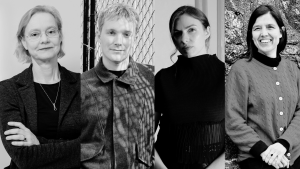
At Estonia’s only international art fair dedicated to contemporary photography and presenting the very best of global practice, Foto Tallinn 2026 will showcase a selection chosen by highly esteemed professionals from the art world. The jury comprises Anna Tellgren, Jeppe Ugelvig, Margot Samel, and Sara Giuliattini.
“Foto Tallinn aims to bring together art enthusiasts, collectors, artists, and galleries who value high-quality photographic art, strong narrative, and a distinctive visual perspective that resonates with the viewer,” commented Foto Tallinn 2026 Artistic Director Lilian Hiob-Küttis. “In addition, the fair focuses on discussions, professional networking, innovative approaches, and artistic positions that have shaped artists’ work over the past five years, while also looking ahead to the future,” she added.
Focusing on contemporary photography and its future, Foto Tallinn will take place for the twelfth time this autumn and remains firmly committed to presenting the very best of contemporary photography and championing photographic art. “Contemporary photography is not separate from other, so-called traditional media such as printmaking or painting. It is a professional medium through which artists can address themes that matter to them and to viewers, whether expressed critically, illustratively, poetically, or conceptually,” said Hiob-Küttis. “For example, the collection of Moderna Museet includes over 100,000 photographic works. A comparable number of photographic works can be found in the permanent collections of Centre Pompidou and the Museum of Modern Art. In serious private collections, photographic art is likewise regarded as an essential component alongside other media,” she continued.
Hiob-Küttis noted that at Nan Goldin’s exhibition, which opened in January at the Gagosian gallery in London, the preview queue stretched around the block. At Frieze Los Angeles 2025, photographic works were presented in the Old Masters section alongside antique sculptures and modern paintings. Contemporary photography also held a prominent position at the February 2026 edition of Frieze LA.
“Younger-generation collectors are showing strong interest in editioned formats, which are often the first step on a collecting journey, as editioned works tend to be more accessible in price than unique pieces. Estonian art enthusiasts are great admirers and buyers of printmaking, demonstrating that editioned artworks are highly valued here. This paves an ideal path towards photography, which by its nature is also an editioned medium. While print editions often run to several dozen, photographic works are generally produced in editions of three to five,” she explained.
Foto Tallinn 2026 will take place from 18–20 September at Kai Art Center. Applications for artists and galleries are open until 23 March 2026. The selection made by the international jury of leading experts will be announced in late spring.
“It is a true honour to introduce the members of the Foto Tallinn 2026 jury. They are internationally recognised experts in the art field whose rich and diverse experience forms an exceptional whole. Among the jurors evaluating the works are representatives of highly influential institutions, voices offering academic and critical perspectives, professionals with experience in contemporary and private galleries, and specialists engaged with the latest developments in contemporary photography,” said Hiob-Küttis. “This offers applying artists an excellent opportunity to come to the attention of key experts,” she added.
The jury members are Anna Tellgren, Jeppe Ugelvig, Margot Samel, and Sara Giuliattini.
Anna Tellgren is Chief Curator of Photography at Moderna Museet in Stockholm, as well as a researcher and lecturer. She possesses extensive knowledge of the history of photography up to the present day, with a particular focus on the Nordic and Baltic art scenes.
Curator and cultural critic Jeppe Ugelvig writes regularly for leading specialist publications such as Artforum, Frieze, and Spike Art Quarterly, bringing to the jury a timely and critical perspective grounded in academic research.
New York–based gallerist and one of the organisers of the Esther art fair, Margot Samel is known for discovering outstanding talent. With extensive experience representing artists at major international fairs, she assesses the potential of submitted works specifically within the context of art fairs. Originally from Estonia, Samel opened her eponymous gallery in Tribeca, New York, in May 2022.
Sara Giuliattini, Co-Director of the photography publishing house Polycopies, contributes in-depth knowledge of the history of photography and the latest developments in contemporary photographic practice.
Foto Tallinn 2026 Artistic Director Lilian Hiob-Küttis is a curator and gallerist. Her international expertise stems from her long-standing work at Temnikova & Kasela Gallery and at ELLELL, Estonia’s first art advisory firm. She holds a Master’s degree in Art History and Visual Culture from the Estonian Academy of Arts and is a guest lecturer in curatorial studies there. She also teaches the course “The ABC of Art Collecting” at the Estonian Academy of Arts Open Academy. She has curated exhibitions at the Estonian Museum of Applied Art and Design, Punctum Gallery, Kogo Gallery, Margot Samel Gallery (New York), Asni Gallery (Riga), Vaal Gallery, and elsewhere.
Dedicated to contemporary photography, Foto Tallinn 2026 will take place from 18–20 September 2026 at Kai Art Center. Applications are open until 23 March 2026. The fair is organised by Foto Tallinn, the Estonian Union of Photography Artists, and the Estonian Contemporary Art Development Center. Foto Tallinn 2026 is supported by Sorainen, Sunly, Artproof, the Cultural Endowment of Estonia, and the Tallinn Culture and Sports Department.
Foto Tallinn is a biennial international art fair presenting work selected by a jury of leading experts and represented by artists and galleries, bringing the latest contemporary photographic art to audiences while offering collectors and art enthusiasts the opportunity to discover new artworks, new ideas, and the artists themselves. Foto Tallinn – shaping the future of photographic art.
Further information: www.fototallinn.ee
